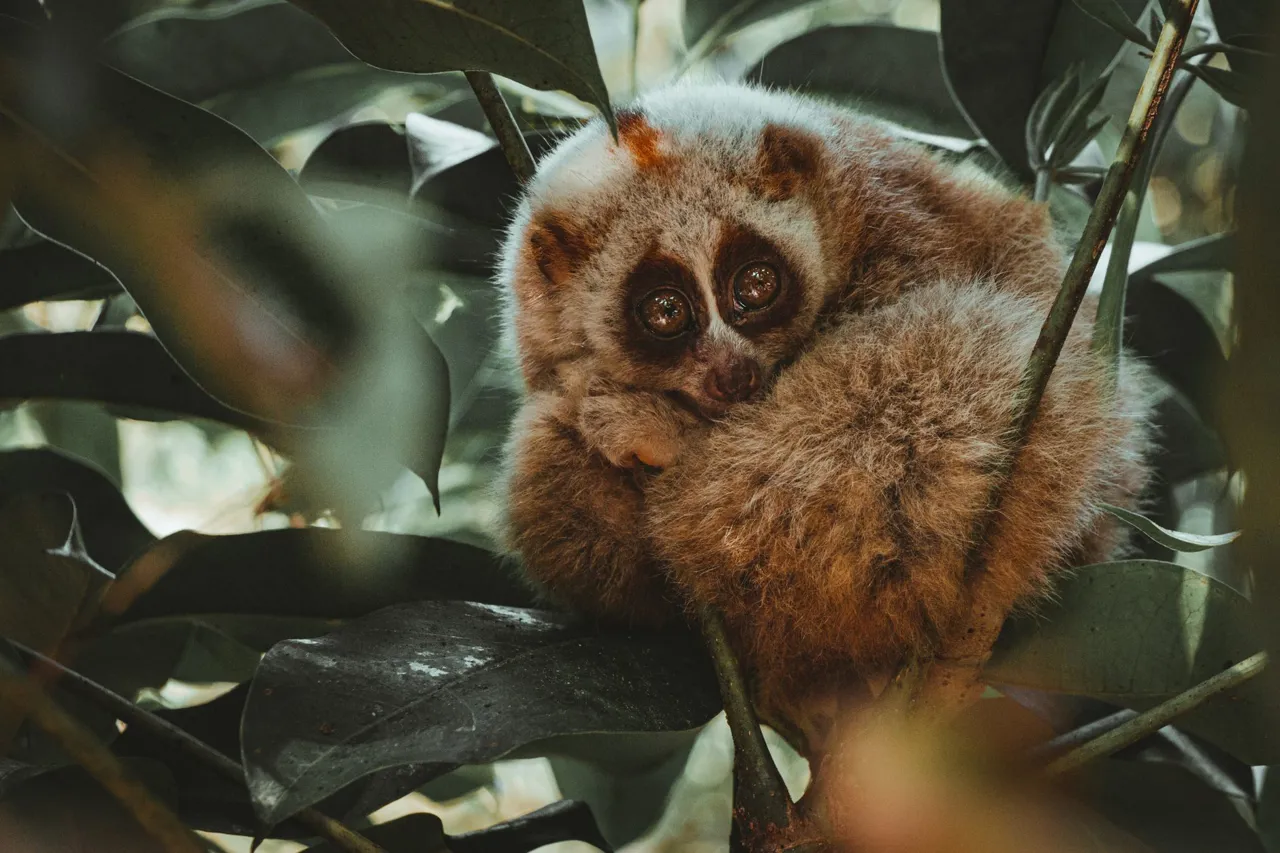
The Bangka slow loris, a small venomous primate feared extinct, continues to survive on Indonesia’s Bangka Island. Although local communities remained familiar with the animal, its last documentation in scientific literature dated to around 1937. The IUCN Red List classified it as critically endangered and possibly extinct in 2015.
A recent study examined more than 90 lorises rescued by the local Alobi Wildlife Rescue Center after residents reported finding them in backyards, along roads, and on plantations. Of 43 animals rescued in 2021, researchers mapped 39 across all four districts of Bangka, including Pangkalpinang, the island’s largest city. This distribution indicates that the species remains widespread on the island.
Its continued presence does not mean its survival is secure. In 2021, seven rescued lorises suffered electrical burns from power lines, while others sustained injuries from vehicle collisions, dog attacks, or entanglement in fences. At least three animals died.
The species’ forest habitat on Bangka declined by 62% between 2000 and 2012. Illegal tin mining and extensive clearing for oil palm plantations have substantially reduced its natural habitat. Nevertheless, 86 lorises rescued since 2015 recovered and were released into remaining protected forest fragments.
The researchers recommend formally reassessing the species’ IUCN status to remove the “possibly extinct” designation. They also call for habitat protection, monitoring after release, and a conservation breeding program outside the wild. Protecting the remaining forests and Bangka’s threatened freshwater ecosystems could also help safeguard other less-studied species.