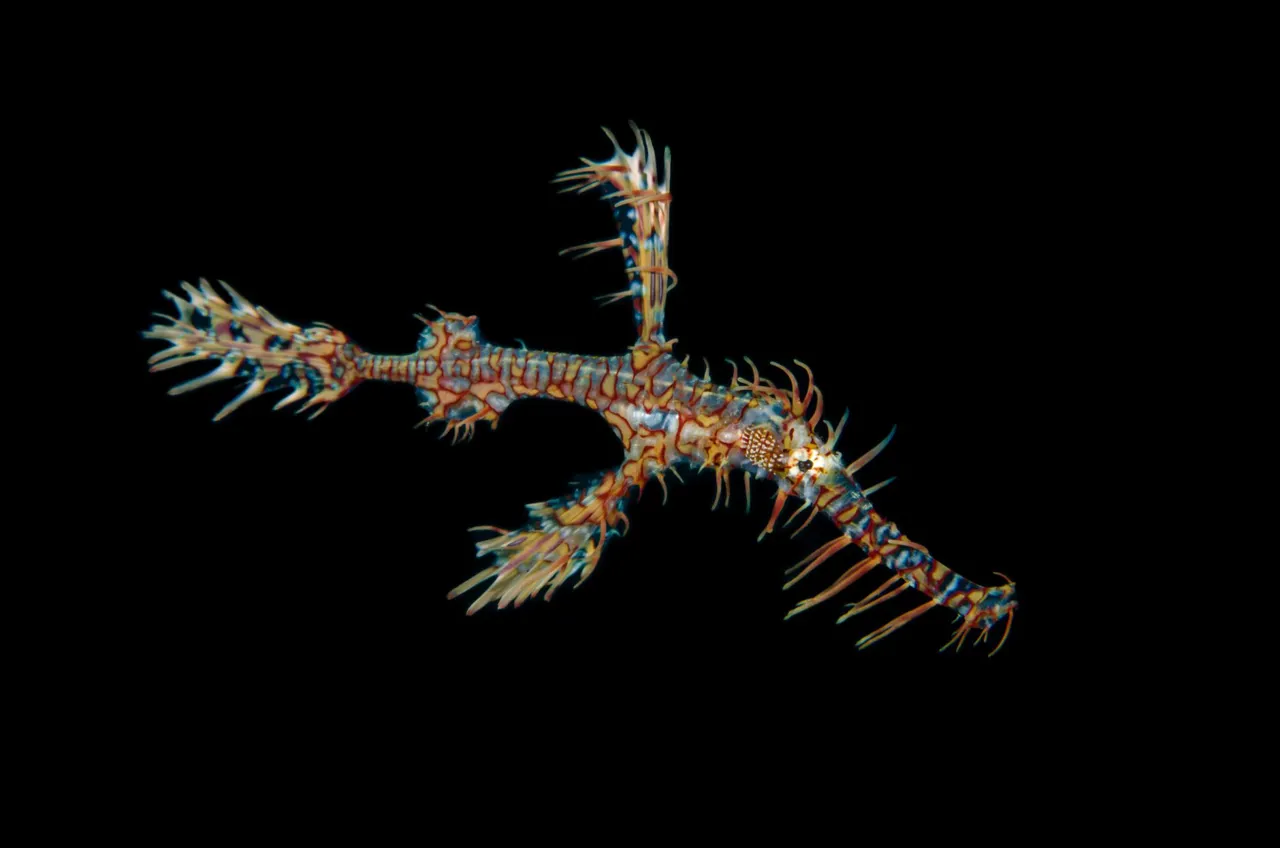
A thumb-sized fish newly described from southern Australia’s deep reefs has helped reveal a distinct evolutionary branch of seahorse lookalikes. Named the helmethead sea muppet for its domed crest, it joins two related species in the genus Australyichthys. Despite their bent heads, grasping tails and enclosed male brood pouches, the three species are not true seahorses.
The genus is represented by just seven preserved specimens, collected over roughly 65 years along more than 2,500 kilometers of coastline. All were accidental catches from seafloor operations at depths of approximately 50 to 125 meters. The sole helmethead specimen, recovered in 2006, was mistakenly cataloged in the South Australian Museum’s invertebrate collection.
To avoid dissecting irreplaceable specimens, researchers used micro-CT scanning to construct three-dimensional skeletal models. Unlike true seahorses, the fish lack both a rigid framework of fused plates supporting the belly and a bony crown on the head. Their abdominal bones instead follow a different arrangement.
DNA recovered from the helmethead independently supported the skeletal findings, placing the genus outside true seahorses on their closest related branch. The results demonstrate convergent evolution: similar body plans developed independently in separate lineages. These fish inhabit the Great Southern Reef, whose deeper areas remain poorly explored.
No specimen has been collected in nearly two decades, and no individual has ever been observed alive. Their designation as lost species is not a prediction of extinction; it establishes them as priorities for targeted surveys rather than further accidental discovery.