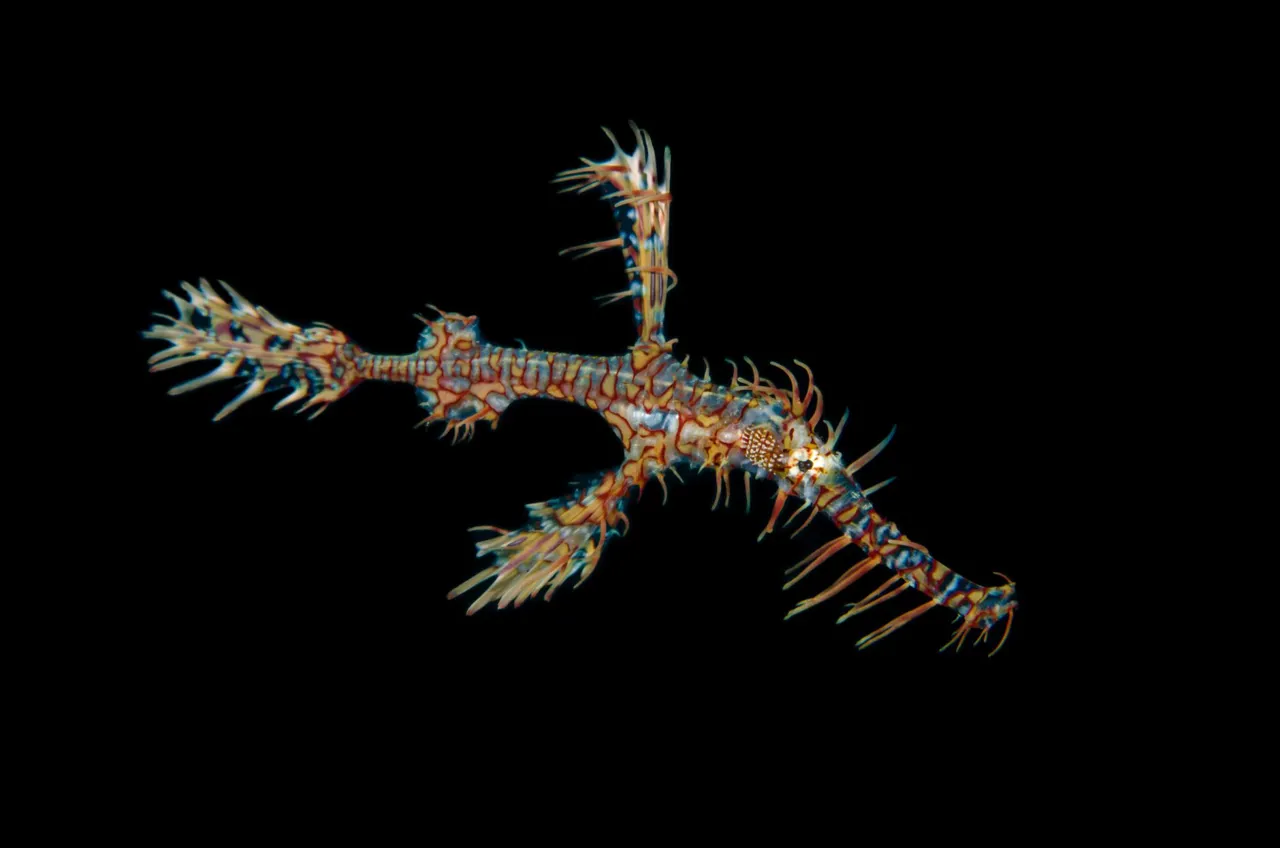
A newly described fish from deep reefs off southern Australia looks like a seahorse but belongs to a different group. Named the helmethead sea muppet for its helmet-shaped head crest, it is no longer than a thumb. Together with two related species, it forms a separate genus, a group of closely related species.
Only seven specimens are known, collected over about 65 years. All were caught accidentally by equipment working on the seafloor at depths of about 50 to 125 meters. The only helmethead specimen was collected in 2006 and mistakenly stored in a museum collection for animals without backbones.
Because the specimens were too valuable to cut open, researchers used detailed X-ray scans to examine their skeletons. The scans revealed that they lack important bone structures found in true seahorses. DNA from one specimen also placed the group outside the seahorses, supporting the evidence from the bones.
The findings show that the seahorse body shape evolved independently in related branches of the fish family tree. None of these fish has ever been seen alive, and none has been collected in nearly two decades. They now qualify as lost species, a label that does not mean they are extinct. Instead, it identifies them as priorities for planned searches.