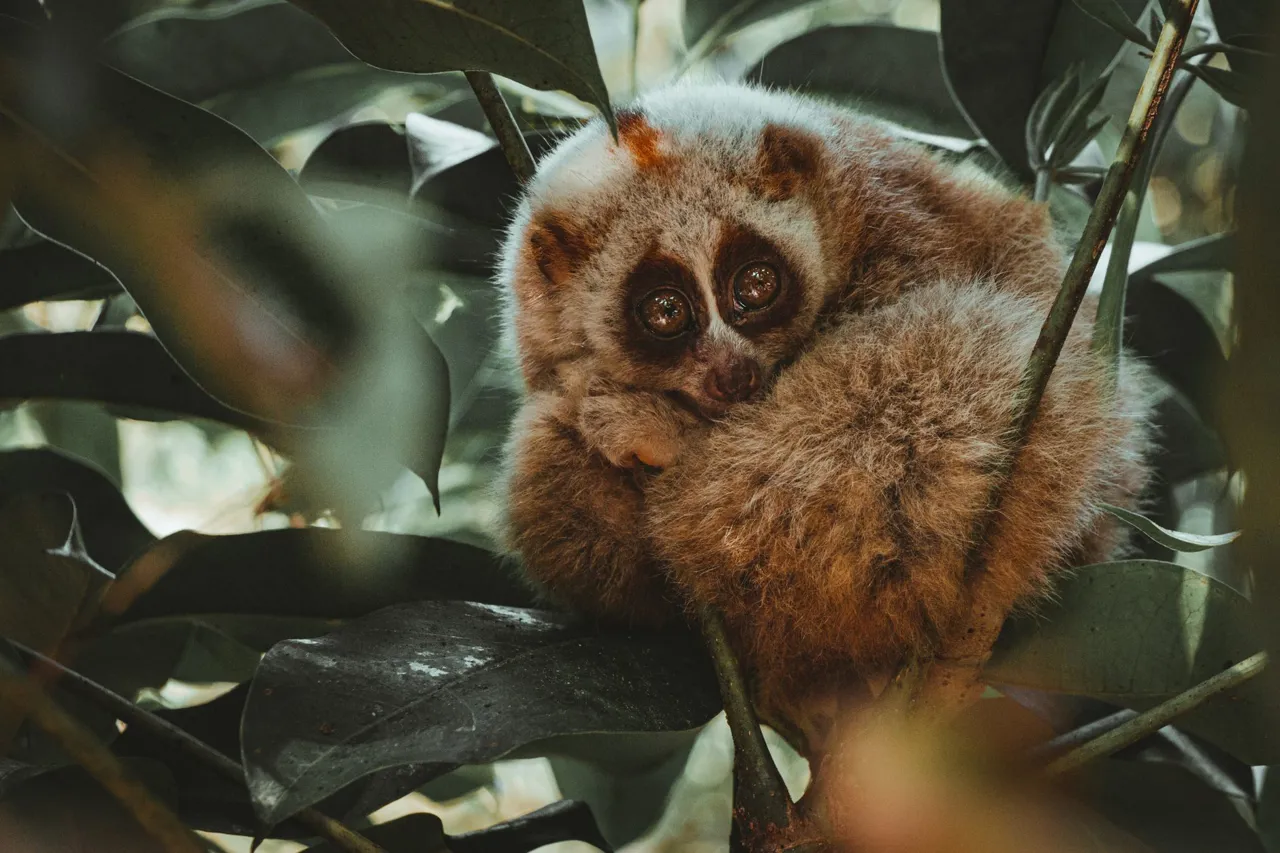
The Bangka slow loris, a small venomous primate, still survives on Indonesia’s Bangka Island despite fears that it had disappeared. Local communities had continued to encounter it, although its last record in scientific literature dated to around 1937. In 2015, the international IUCN Red List classified it as critically endangered and possibly extinct.
Researchers examined more than 90 lorises rescued by Alobi, a local wildlife rescue center. Residents had contacted the center about animals found near homes, roads, and plantations. In 2021, Alobi rescued 43 lorises, and researchers mapped 39 of them across all four districts of Bangka, showing that the species remains widely spread.
However, the animals face serious threats. Seven rescued lorises suffered burns from power lines in 2021, while others were injured by vehicles, dogs, or fences; at least three died. Their forest habitat decreased by 62% between 2000 and 2012, with illegal tin mining and land clearing for oil palm plantations contributing to its loss.
Since 2015, Alobi has released 86 recovered lorises into remaining protected forests. Researchers recommend stronger habitat protection, tracking animals after release, and a breeding program in human care. They also want the IUCN Red List classification reviewed so that the species is no longer labeled possibly extinct.