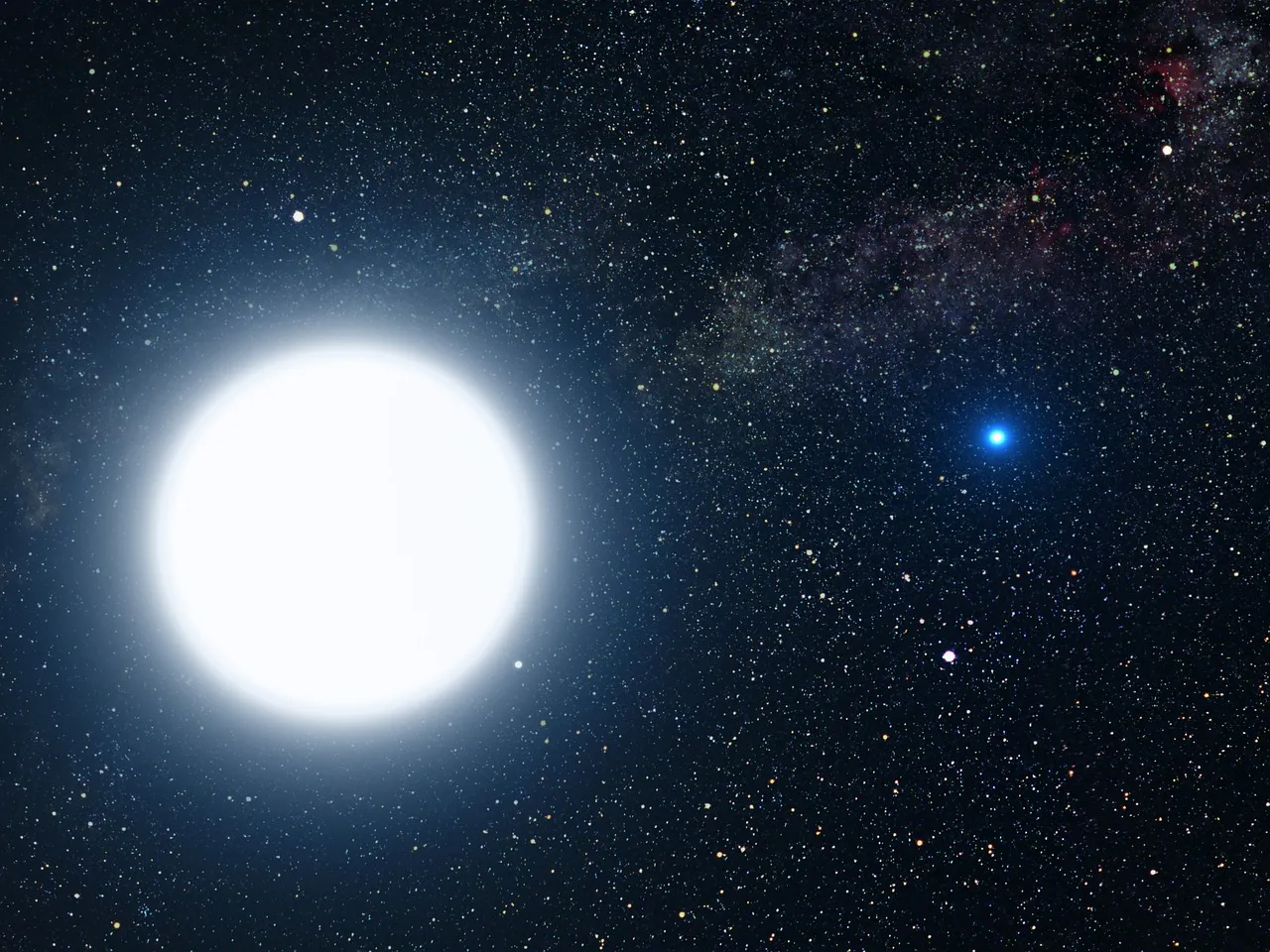
Astronomers at the University of Warwick have identified the first known star that would appear genuinely green to human eyes. Named WD J1330+6435, it is a white dwarf with a temperature of about 4,000 degrees Celsius. White dwarfs are extremely dense remains of stars similar to our Sun. Although their name suggests otherwise, some can appear pink, purple, yellow, or light blue.
No white dwarf is close enough for people to distinguish its color directly. Instead, the researchers analyzed spectra, measurements that separate starlight into different wavelengths. They then used a model of human color vision to calculate each star's appearance. In these stars' dense atmospheres, certain substances absorb light differently than they would in less dense conditions. The green star collected rocky material from its former planetary system. This added elements to its atmosphere, including sodium, which absorbs orange light and helps produce its green appearance.
To investigate how common unusual colors might be, the team examined 151 white dwarfs within about 65 light-years of Earth. Two appeared yellow and three appeared pink. The findings suggest that roughly one in 30 white dwarfs could have an unexpected color. However, the typical white dwarf in a representative nearby population appears white.