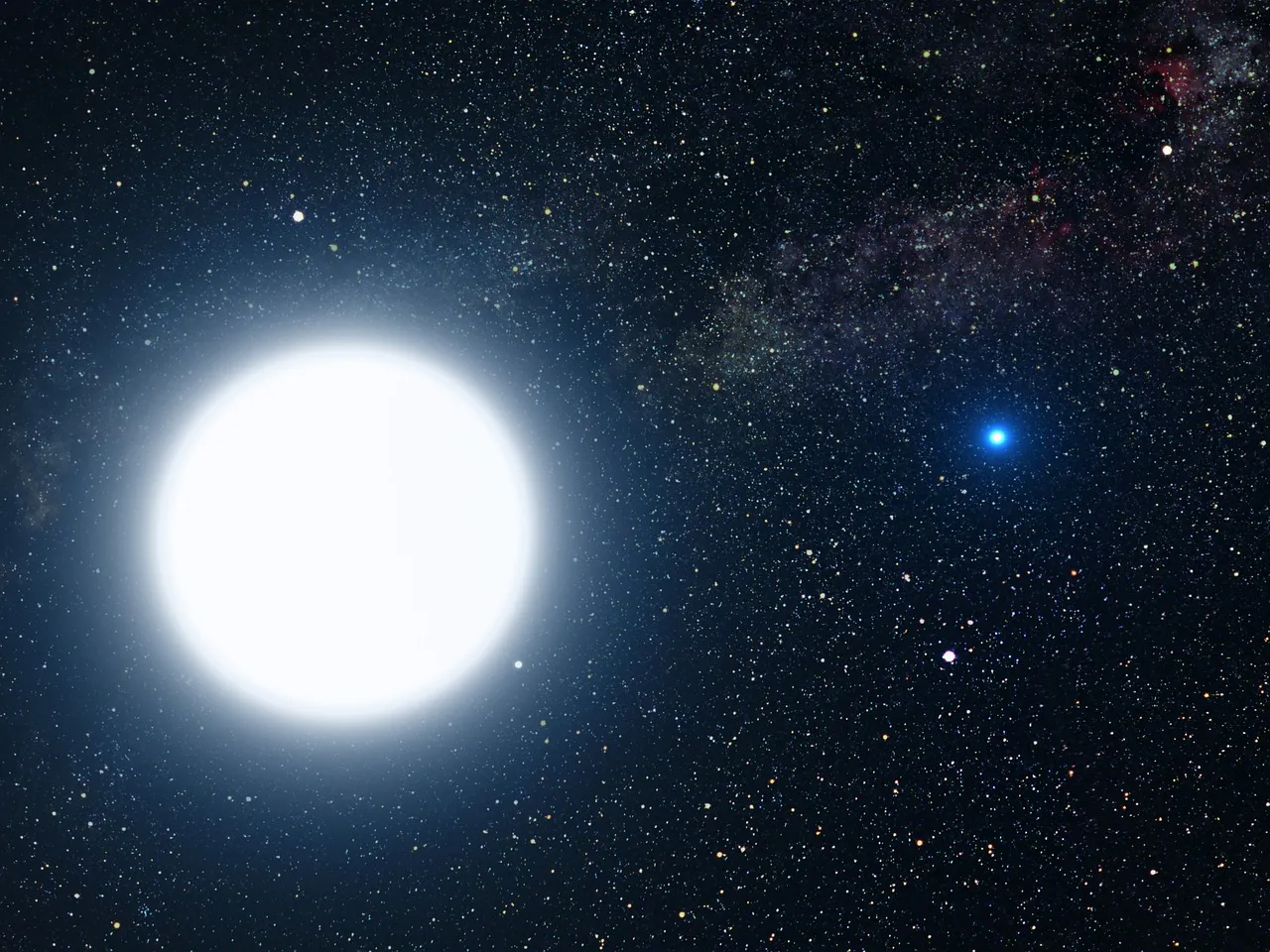
University of Warwick astronomers have identified what they consider the first credibly established example of a star that would appear genuinely green to human eyes. The object, WD J1330+6435, is a white dwarf with a temperature of approximately 4,000 degrees Celsius. These exceptionally dense remnants of Sun-like stars were once thought to follow the familiar relationship between temperature and stellar color. The research, published in RAS Techniques and Instruments, instead reveals a palette that includes pink, purple, yellow, and cyan.
Because no white dwarf is close enough for its color to be distinguished directly by human vision, the researchers analyzed stellar spectra and processed the measurements through a model of human color perception. The unexpected hues arise from extreme atmospheric density, which alters how trace elements absorb light. In the coolest white dwarfs, atmospheric material can approach the density of water. Debris captured from the planetary system that once surrounded WD J1330+6435 added calcium, lithium, and sodium to its atmosphere. Sodium absorbs orange wavelengths, contributing to the calculated chartreuse appearance.
A representative sample of 151 white dwarfs within approximately 65 light-years of Earth contained five unusually colored objects: two yellow and three pink. This suggests that roughly one in 30 white dwarfs could display an unexpected hue. Nevertheless, the typical nearby white dwarf appears white. The impression that these remnants are generally blue partly reflects observational selection: hotter, bluer white dwarfs are brighter and detectable at greater distances, making them disproportionately prominent in surveys based on brightness.