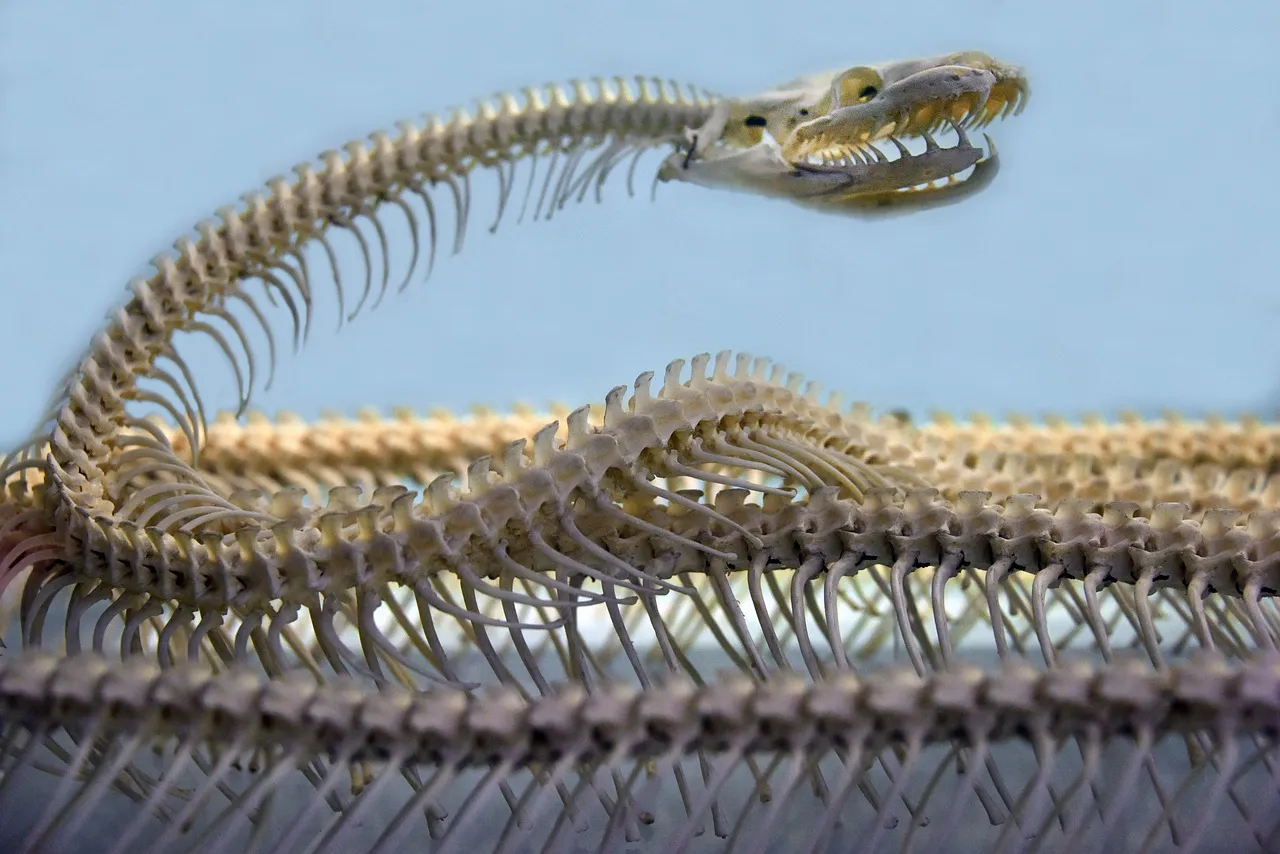
Fossils discovered in Gujarat, western India, indicate that Vasuki indicus, a snake that lived approximately 47 million years ago, may rank among the largest ever identified. Debajit Datta and Sunil Bajpai of the Indian Institute of Technology Roorkee described the species in Scientific Reports in 2024. They examined 27 fossilized vertebrae recovered from the Panandhro Lignite Mine in Kutch, many exceptionally well preserved and apparently belonging to an adult.
Comparisons with living snakes yielded estimated lengths of 36 to 50 feet, although the substantial variation between calculation methods leaves its precise size uncertain. These estimates place Vasuki alongside Titanoboa, the extinct Colombian giant thought to have reached roughly 43 feet, without establishing which was longer. Its broad vertebrae suggest a thick body and relatively slow movement, consistent with an ambush predator rather than an active pursuer. It may have occupied land and shallow swamps. Average regional temperatures of approximately 82 degrees Fahrenheit could have supported growth, but habitat, food availability, and evolutionary history also shaped body size.
Vasuki belonged to Madtsoiidae, an extinct snake family distinct from modern pythons and anacondas. Its relationships suggest that a giant-snake lineage originated on the Indian subcontinent before dispersing elsewhere. Additional research by Datta and Bajpai, published in 2025, identified other ancient snakes in western India, including aquatic species and another large madtsoiid. These discoveries reveal a diverse community occupying tidal areas, swamps, and marshes, placing Vasuki within a broader prehistoric ecosystem.