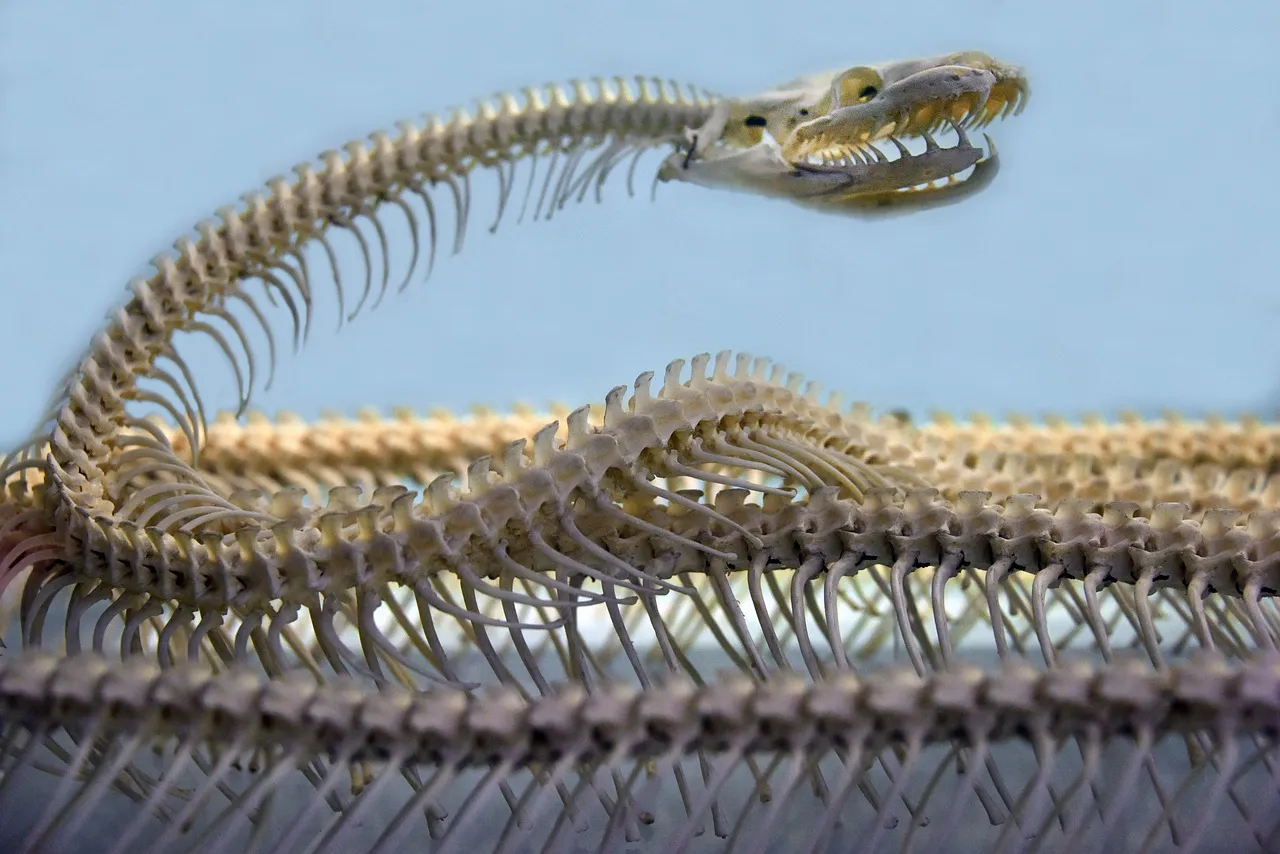
An ancient Indian snake dating to about 47 million years ago may have ranked among the biggest ever known. Researchers identified Vasuki indicus from 27 preserved backbone bones found at a mine in Gujarat, western India. Debajit Datta and Sunil Bajpai, from the Indian Institute of Technology Roorkee, described the discovery in 2024.
By comparing the bones with those of living snakes, the researchers estimated a length of 36 to 50 feet. However, different calculation methods gave different results, so its exact size remains uncertain. Vasuki could have rivaled Titanoboa, a giant extinct snake from what is now Colombia, which is thought to have reached about 43 feet.
Vasuki's large body and bone structure suggest that it moved slowly. It may have hunted by hiding and waiting for prey to approach, rather than chasing it. The snake probably spent time on land or in shallow, swampy areas. Its tropical surroundings had average temperatures of about 82 degrees Fahrenheit. Warmth may have supported its growth, although food, habitat, and evolutionary history also influenced its size.