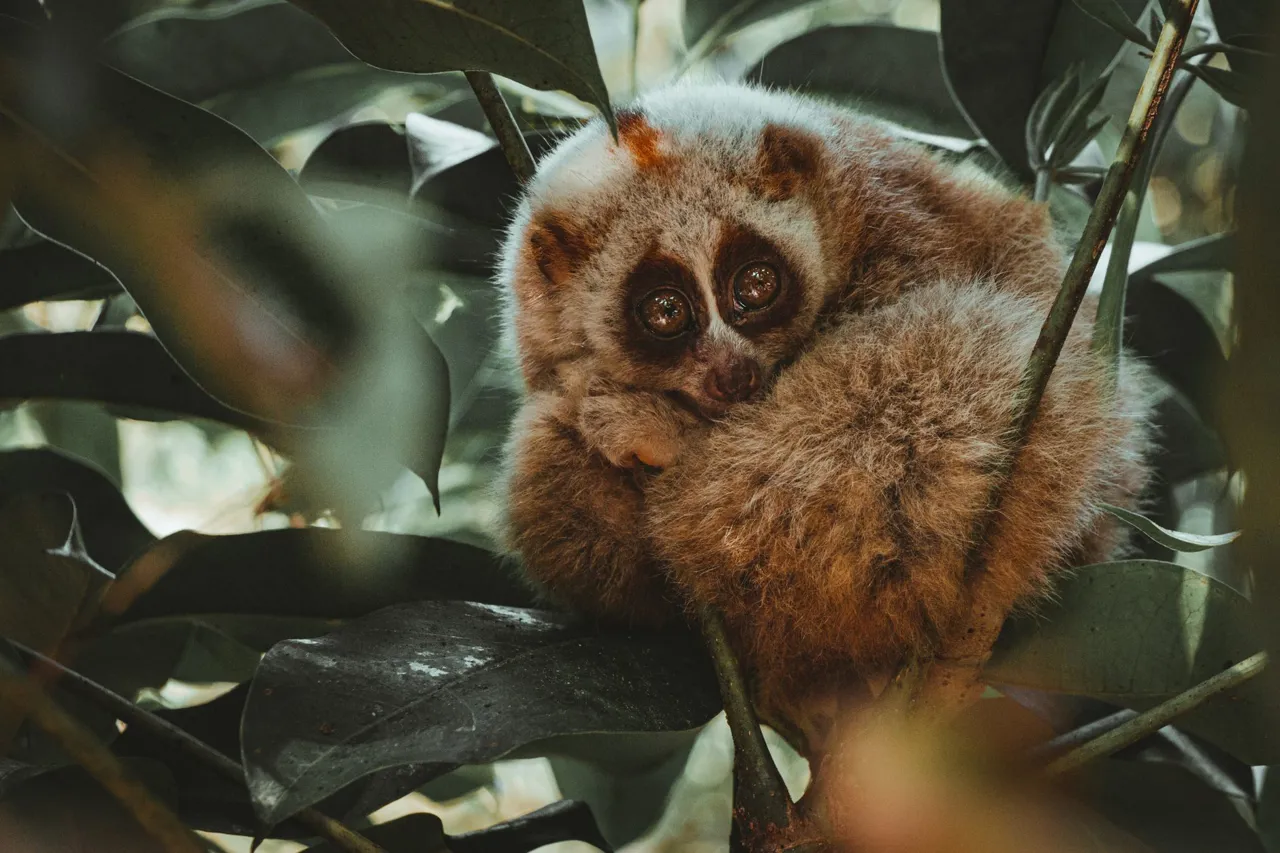
The Bangka slow loris, a venomous primate feared extinct, continues to survive on Indonesia’s Bangka Island, according to a recent study. For local communities, however, it was never truly lost. The species was classified as critically endangered and possibly extinct on the IUCN Red List in 2015, following a gap in scientific documentation stretching back to around 1937.
Researchers analysed more than 90 lorises rescued by the Alobi Wildlife Rescue Centre after residents reported animals in gardens, beside roads and on plantations. Of 43 animals rescued in 2021, 39 could be mapped across all four districts of Bangka, including its largest city, Pangkalpinang. These records indicate that the species remains widely distributed.
Nevertheless, its forest habitat declined by 62% between 2000 and 2012. Illegal tin mining and extensive clearance for oil palm plantations have contributed to habitat destruction. In 2021, seven rescued lorises suffered electrical burns from power lines; others sustained injuries involving vehicles, domestic dogs or fences. At least three rescued animals died that year.
Since 2015, 86 lorises that recovered after rescue have been released into remaining protected forest fragments. The researchers recommend a formal reassessment of the species’ Red List status to remove the ‘possibly extinct’ designation. They also advocate stronger habitat protection, post-release monitoring and a conservation breeding programme in human care.