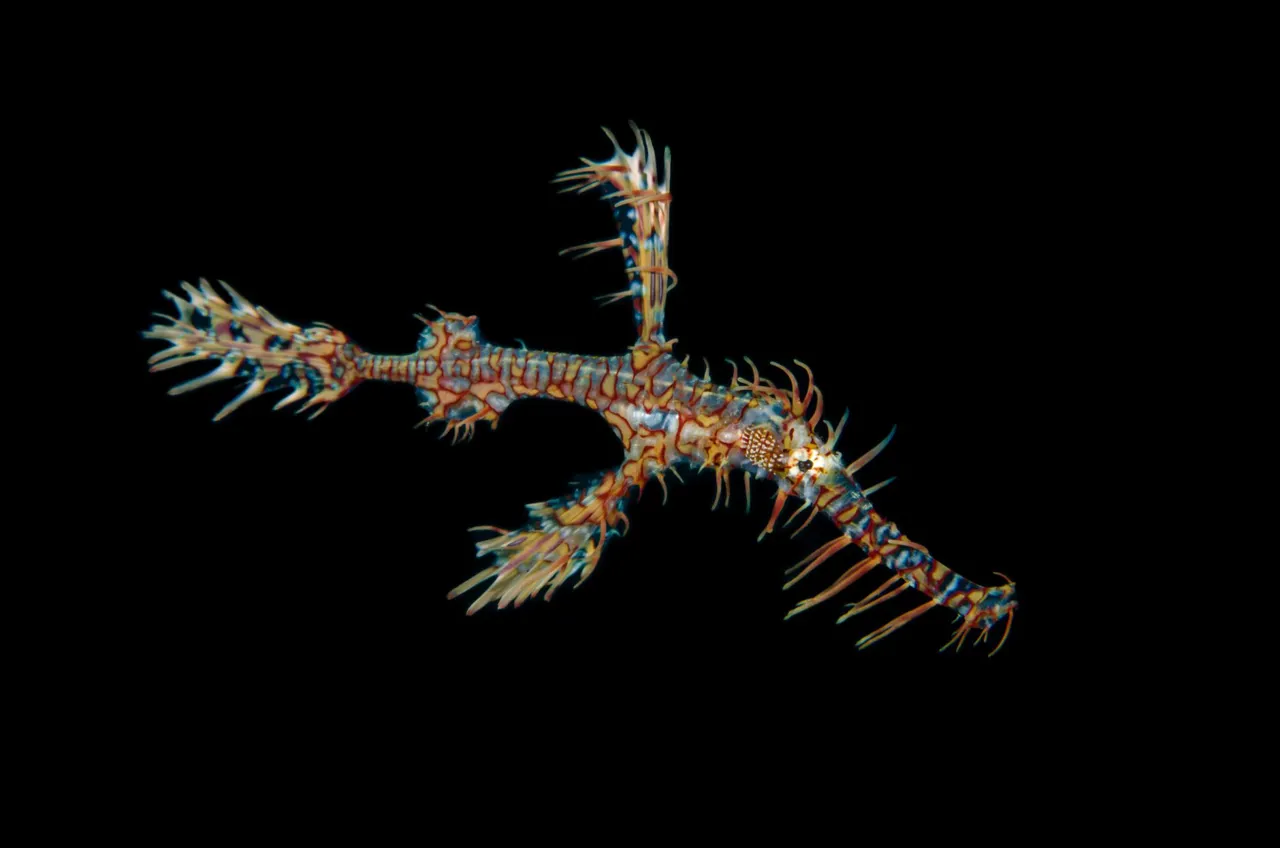
A newly described fish from southern Australia’s deep reefs has helped establish a distinct lineage of seahorse lookalikes. Named the helmethead sea muppet for its helmet-like crest, the thumb-sized fish shares the bent, horse-shaped head, grasping tail and enclosed male brood pouch associated with seahorses. Yet it and its two relatives belong to a separate genus, Australyichthys.
Because the specimens were irreplaceable, researchers used micro-CT scanning rather than dissection to reconstruct their skeletons in three dimensions. The scans revealed neither the fused bony plates supporting a seahorse’s belly nor its bony crown, known as a coronet. Instead, the fish possess a different arrangement of abdominal bones.
DNA from the new species confirmed the skeletal evidence, placing the group outside true seahorses, on their closest neighbouring branch. It was the only specimen preserved in ethanol rather than formalin, allowing genetic material to survive. The findings demonstrate convergent evolution: a similar body form arising independently in separate lineages.
The entire genus is represented by seven specimens collected accidentally at depths of approximately 50–125 metres over about 65 years. The new species was recovered near the Gambier Islands in 2006 during an expedition sampling small shelled animals. Mistakenly catalogued among invertebrates at the South Australian Museum, it remained unrecognised for years.
No specimens have been collected for nearly two decades, and none of these fish has ever been observed alive. They qualify as ‘lost species’, a designation that prioritises targeted surveys rather than predicting extinction. Their habitat lies within the Great Southern Reef, whose deeper areas remain barely explored.