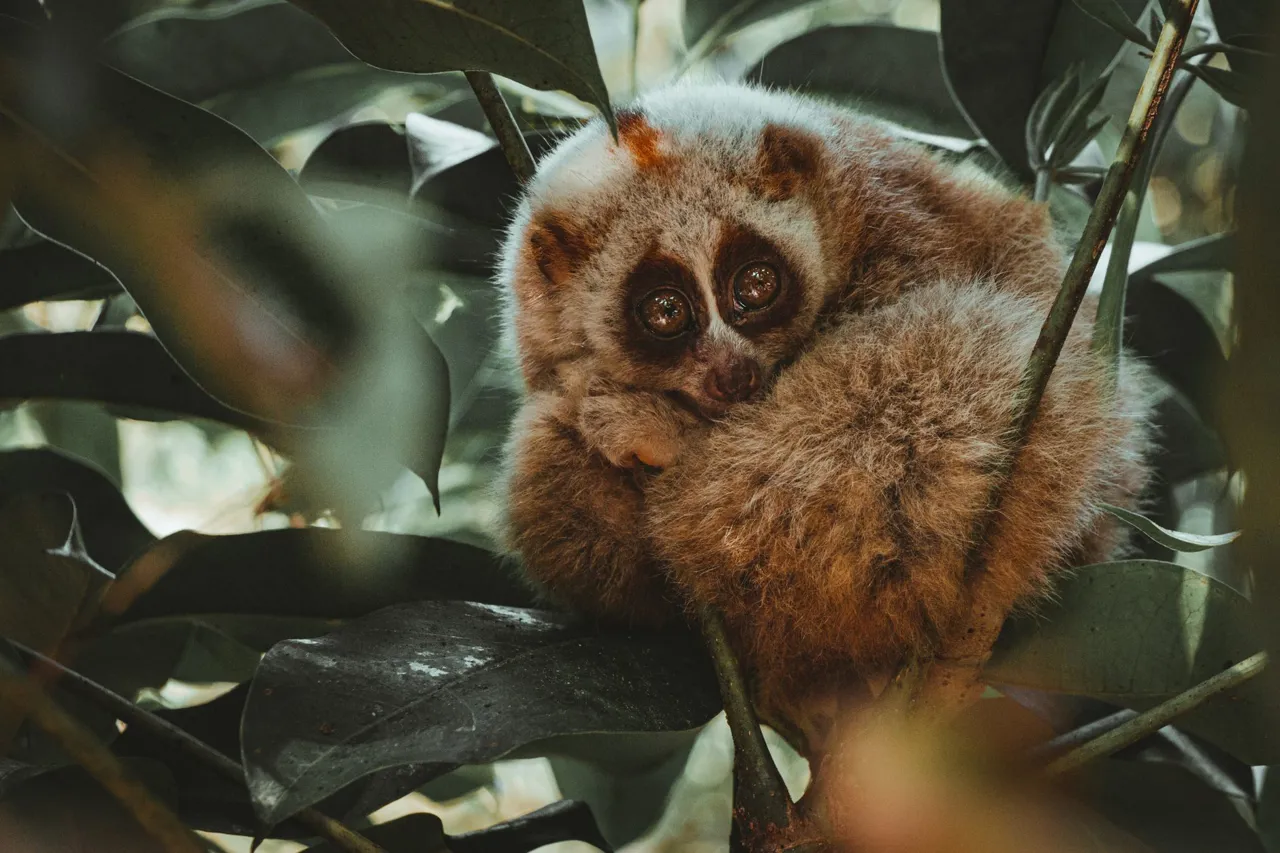
The Bangka slow loris, a small primate with a poisonous bite, still survives on Indonesia’s Bangka Island. Although scientists feared it had disappeared, local communities continued to know of its presence. In 2015, the international IUCN Red List classified it as critically endangered and possibly extinct.
Researchers examined more than 90 animals rescued by the Alobi Wildlife Rescue Centre after residents contacted its team. The animals came from gardens, roadsides and plantations. Rescue records indicate that the species remains spread across the island, rather than surviving in just one small area.
However, its forest habitat decreased by 62% between 2000 and 2012. Illegal tin mining and land clearance for oil palm plantations have reduced its natural home. Rescued animals have also suffered burns from power lines and injuries involving vehicles, dogs and fences. At least three lorises rescued in 2021 died.
Since 2015, 86 rescued lorises have recovered and been released into remaining protected forest areas. The researchers recommend reviewing the species’ international conservation status to remove the description ‘possibly extinct’. They also call for stronger habitat protection and monitoring of animals after release. A breeding programme in human care is another proposed measure to help protect the species.