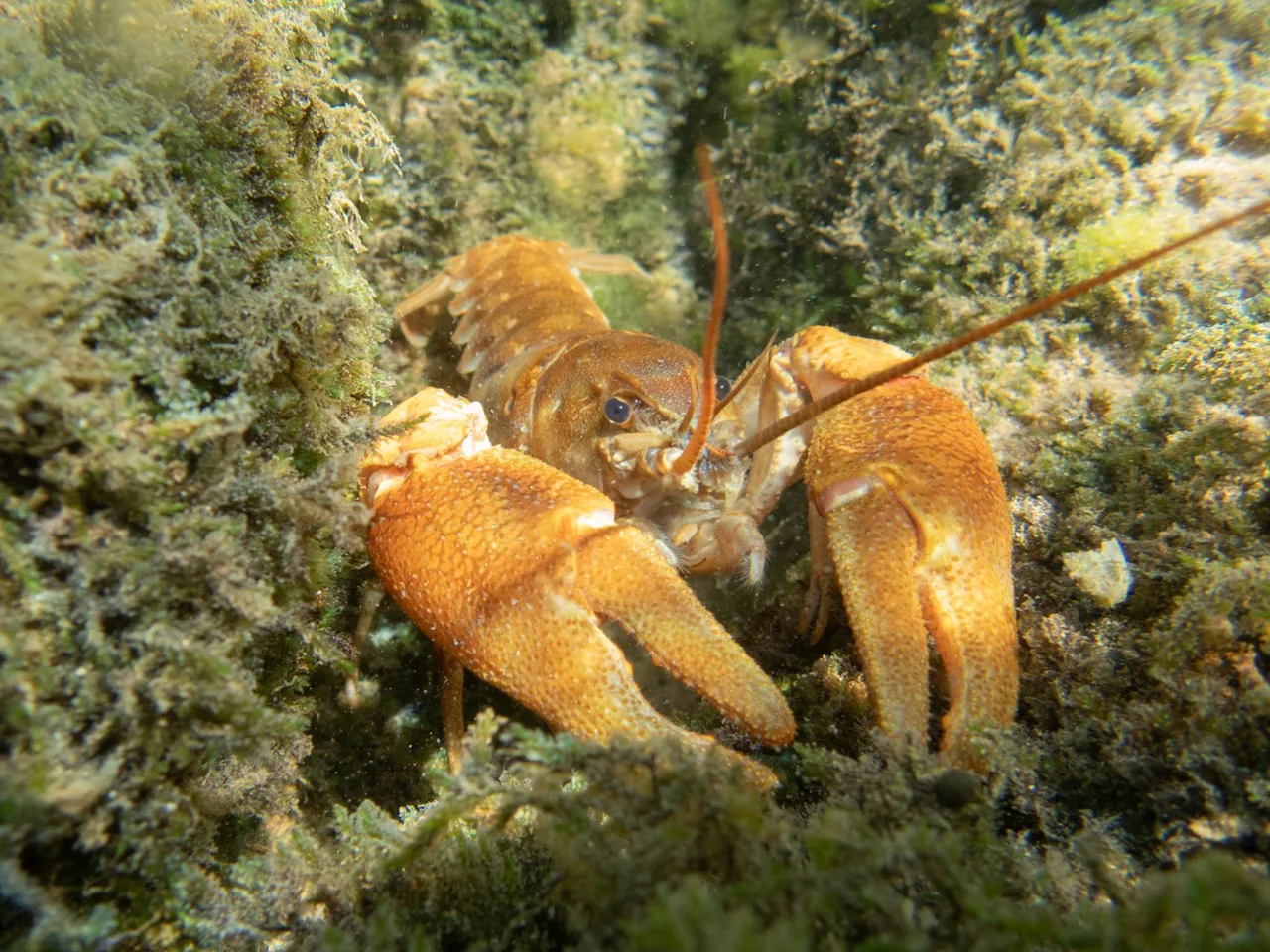
An unusually large crayfish collected in Kentucky by Caitlin Bloomer prompted a nationwide investigation after a colleague challenged her belief that it was the largest ever documented. Bloomer, a teaching assistant professor at the University of Illinois Urbana-Champaign, contacted biologists and museum curators to locate exceptional specimens. Using precision measuring instruments called calipers, researchers compiled a list of 20 individuals representing 18 species. Her original catch made the list and was its only burrowing crayfish. The findings appeared in Ecology.
The record-holder, a Tennessee bottlebrush crayfish preserved at West Liberty University in West Virginia, measured 86.6 millimeters—approximately 3.4 inches—excluding its tail, claws, and antennae. It had been collected in 2011 by Zac Loughman and West Liberty students. The university's collection contained the two largest known North American specimens. Other major contributions came from the Illinois Natural History Survey, which supplied six of the top 20, and the Smithsonian Institution's National Museum of Natural History, which supplied four.
Beyond establishing a record, the comparisons suggested that maximum body size tends to cluster around 80 millimeters across North American species. Neither geographic location, oxygen availability, nor habitat type showed a clear relationship with maximum size. This contrasts with substantially larger species elsewhere, including the Tasmanian giant freshwater crayfish. The researchers therefore proposed that internal biological constraints, potentially involving exoskeleton structure or muscle anatomy, might limit growth. That explanation remains a hypothesis requiring further investigation, rather than an established cause.