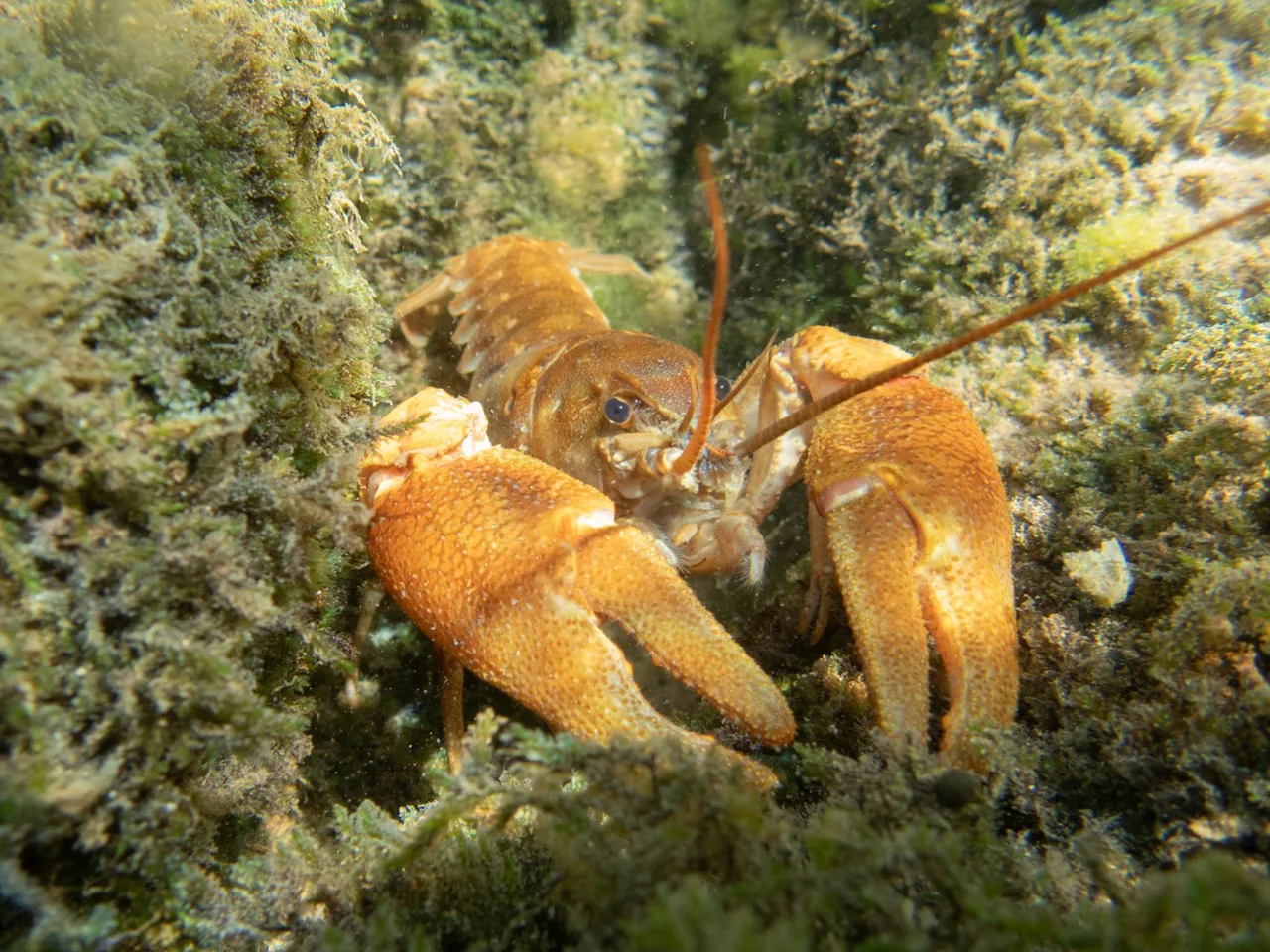
After Caitlin Bloomer found an enormous crayfish in Kentucky, she thought she had caught the largest ever recorded. A colleague disagreed, saying he had caught bigger ones. Their friendly competition led to a nationwide search through museum collections. Researchers identified 20 especially large crayfish belonging to 18 species. Bloomer's catch earned a place on the list.
The largest was a Tennessee bottlebrush crayfish kept at West Liberty University in West Virginia. Its body measured 86.6 millimeters, or about 3.4 inches, without the tail, claws, or antennae—the long feelers on its head. Zac Loughman and university students had collected it in 2011.
The measurements also suggested a possible growth limit. Across different species, the largest bodies tended to measure around 80 millimeters. Researchers found no clear connection between maximum size and location, oxygen levels, or habitat. Instead, the animals' hard outer shells or muscle structure might limit their growth. This explanation remains a hypothesis, or an idea that needs further testing. Some crayfish elsewhere in the world grow much larger.