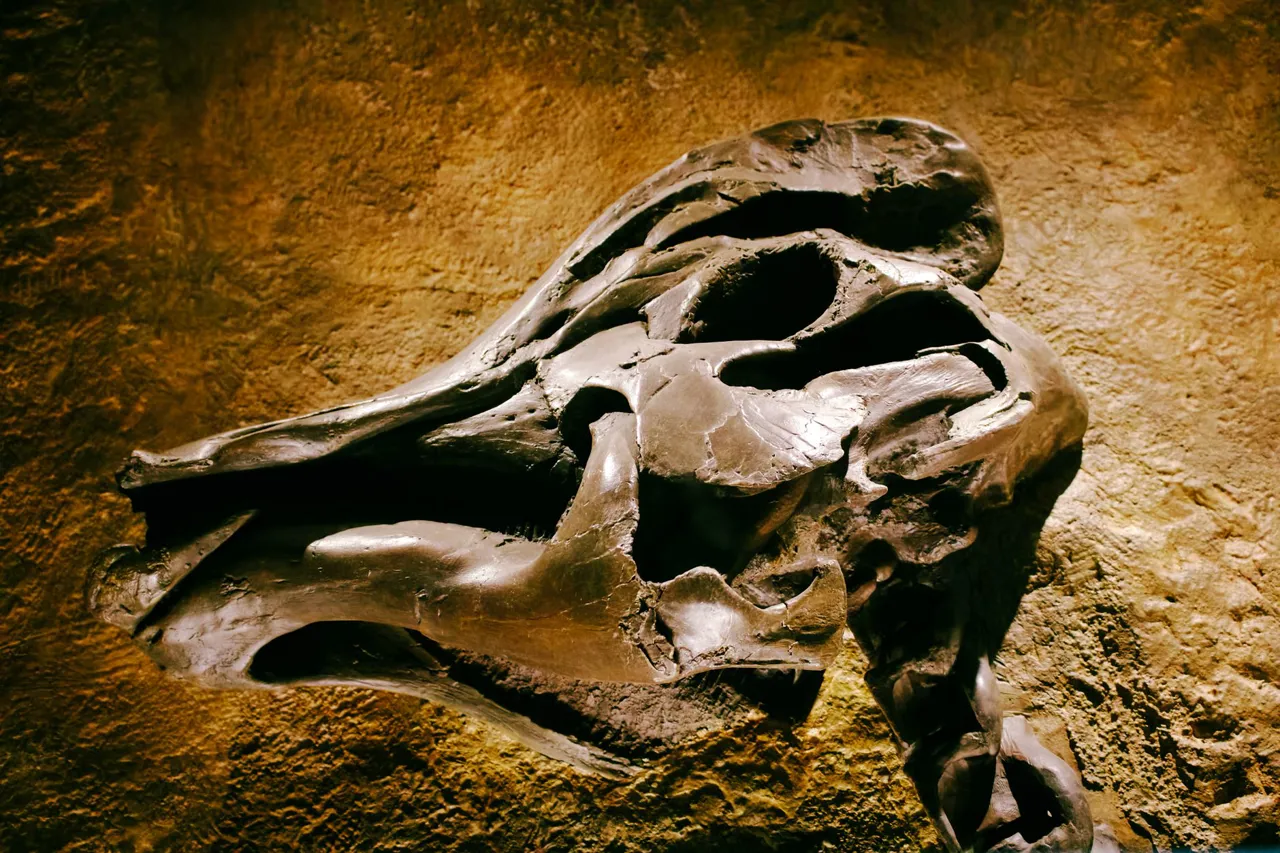
A dinosaur skull fragment kept in London's Natural History Museum for about a century has been identified as a new species, Invictibellatrix amberina. Amateur fossil hunter Reginald Walter Tooley found it on the Isle of Wight. The museum acquired the fragment in 1924, but its exact identity remained a mystery for decades.
Researchers led by University College London used CT scans, which produce images of internal structures, to examine the fossil and build a three-dimensional model. They compared its features with those of other dinosaurs. Their findings identify it as Europe's first confirmed megaraptoran, a member of a group of meat-eating dinosaurs closely related to tyrannosaurs, including T. rex.
The animal lived about 120 million years ago. Researchers estimate that it measured 10 to 13 feet long and stood about five feet tall. It had large, curved claws and may have had feathers. It would have eaten small dinosaurs, lizards, and mammals. Unlike tyrannosaurs, megaraptorans had narrow heads and powerful arms, with huge claws that helped them catch other animals.