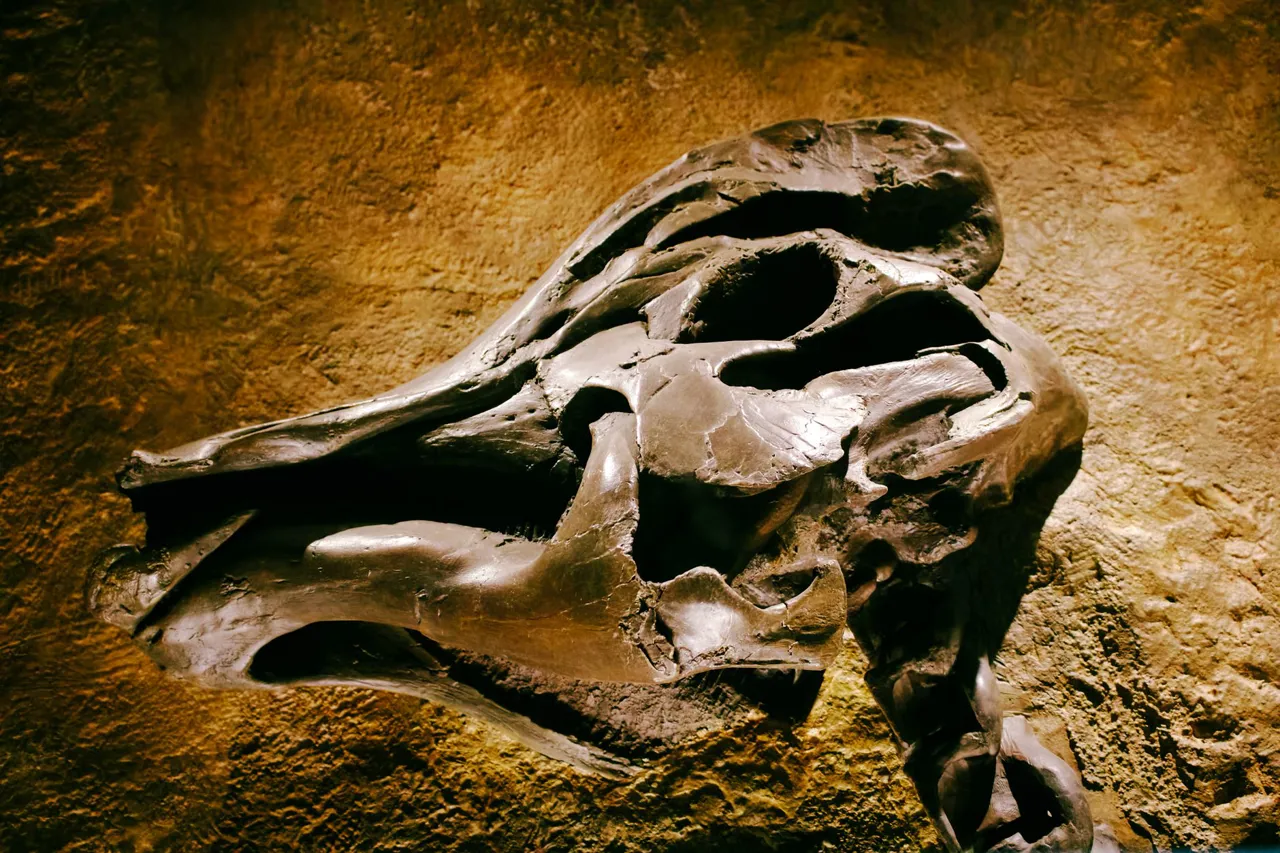
A skull fragment housed in London's Natural History Museum for about a century has been identified as Invictibellatrix amberina, a previously unknown carnivorous dinosaur that lived approximately 120 million years ago. Discovered by amateur fossil hunter Reginald Walter Tooley at the foot of a cliff on the southwestern coast of the Isle of Wight, the specimen entered the museum's collection in 1924. Its significance remained unrecognized for decades.
Researchers led by University College London used CT scanning to reconstruct the fragment in three dimensions and examine its internal cavity. Comparisons with other dinosaurs revealed distinctive anatomical features, including an oval opening for the spinal cord and an hourglass-shaped crest. Computer analyses consistently classified the animal as a megaraptoran—the first confirmed European representative of this poorly understood group. Closely related to tyrannosaurs, megaraptorans differed in having slender skulls, powerful arms, and enormous curved claws. Researchers estimate that this species measured 10 to 13 feet long, stood about five feet tall, and may have had feathers. Its diet would have included small dinosaurs, lizards, and mammals.
Published in Royal Society Open Science, the findings also strengthen a proposed explanation for the group's geographic spread. Scientists had suspected that megaraptorans originated in Asia before passing through Europe toward the southern supercontinent of Gondwana, but confirmed European fossils had been missing. Although Invictibellatrix was among the earliest and smallest known members, some later southern relatives became enormous predators. The discovery also underscores the scientific value of reexamining historical museum collections.