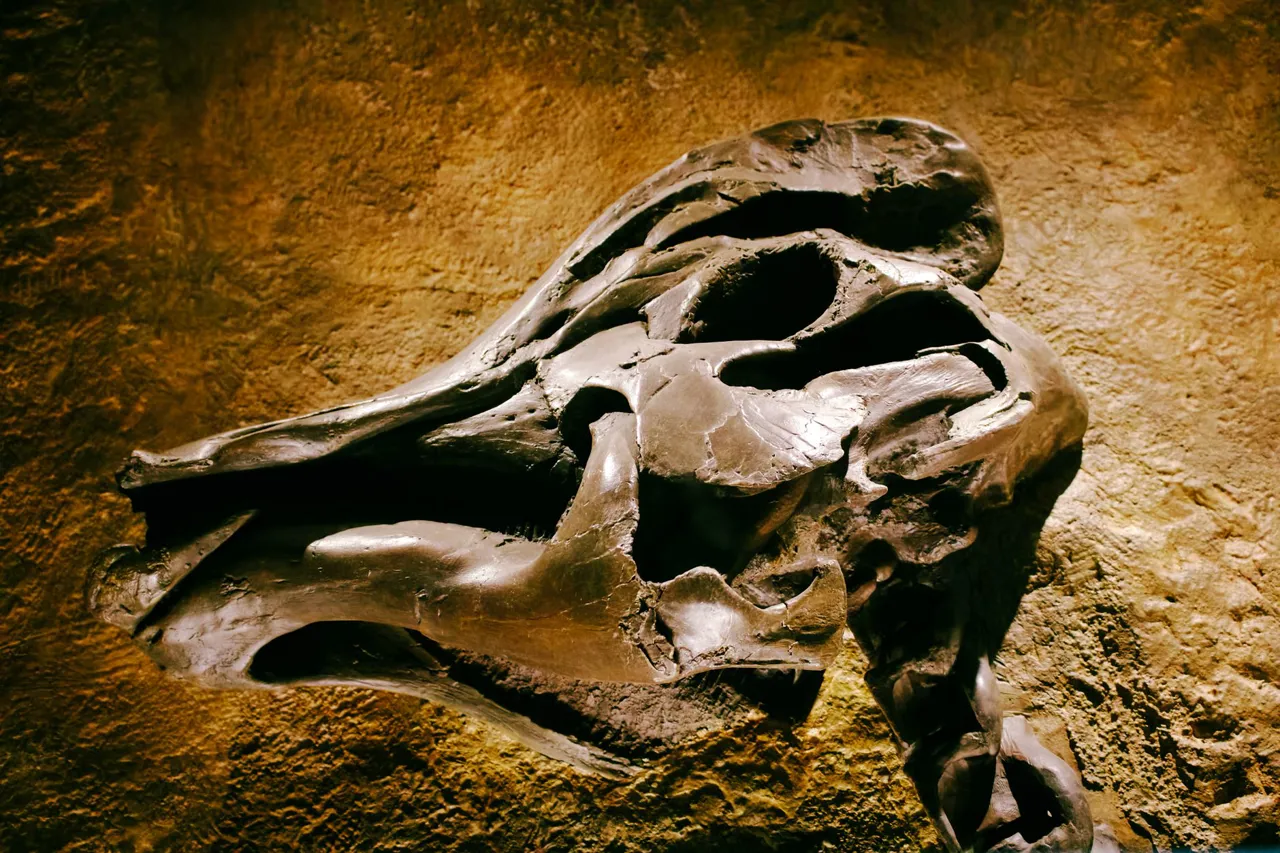
A skull fragment held in the Natural History Museum's collections since 1924 has been identified as Invictibellatrix amberina, a previously unknown carnivorous dinosaur that inhabited present-day Britain around 120 million years ago. Originally discovered by amateur fossil hunter Reginald Walter Tooley at the foot of a cliff on the south-west coast of the Isle of Wight, the specimen provides the first confirmed evidence of megaraptorans in Europe. The research, led by University College London, was published in Royal Society Open Science.
Using CT scans, researchers reconstructed the fragment in three dimensions and modelled the internal cavity that once accommodated the brain. Anatomical comparisons, supported by computer analyses of skeletal characteristics, placed the animal within the megaraptoran group. An oval opening for the spinal cord and an hourglass-shaped crest helped distinguish it from previously identified species. Estimated at three to four metres long and around 1.5 metres tall, it had large, curved claws, may have possessed feathers, and would have hunted small dinosaurs, lizards and mammals. Megaraptorans were closely related to tyrannosaurs, but had relatively slender skulls and powerful arms.
The discovery also supports the hypothesis that megaraptorans spread from Asia through Europe before reaching the southern supercontinent of Gondwana. Although these predators apparently disappeared from northern regions later in the Cretaceous, some southern descendants became enormous hunters. The reassessment demonstrates the continuing scientific value of historical museum collections, where specimens overlooked for generations can still reveal previously unrecognised species.