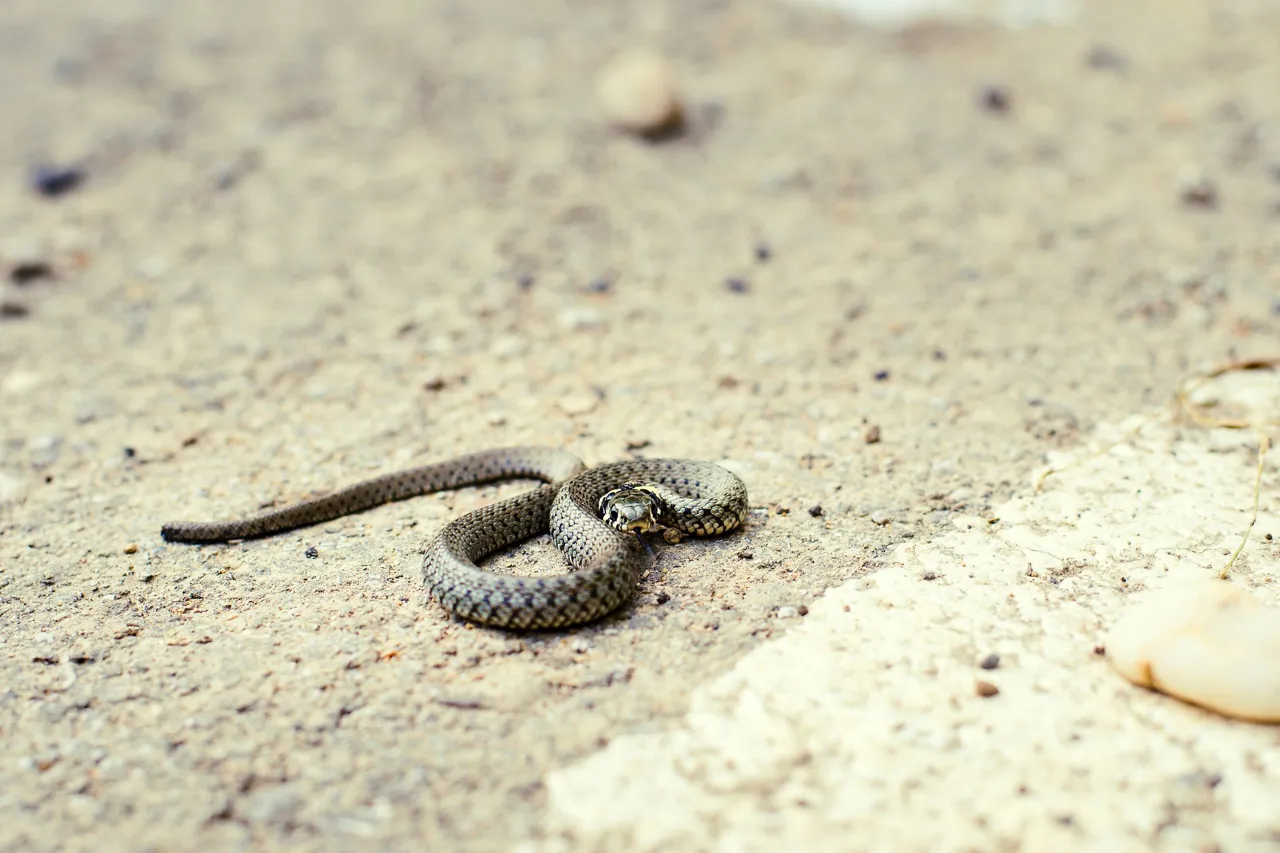
Tiny snakes in Southeast Asia can escape danger by cartwheeling, and new videos reveal how they do it. Researchers studied three species belonging to a group called Pseudorabdion. They collected the snakes in Malaysia’s Kubah National Park, where the animals often hide under leaves. Measuring about 11 to 28 centimeters long, the snakes were difficult to find.
To record their movements, the team built a 2.2-meter track and placed each snake at one end. A gentle tap encouraged it to move while cameras recorded from above and beside the track. Every Pseudorabdion snake tested performed cartwheels, reaching speeds of about 3.8 to 8.3 miles per hour. However, none of the six Calamaria snakes tested for comparison moved this way.
Each roll begins when the snake curves its body into a C shape and raises its head in the direction of travel. It then whips its tail backward, briefly lifting its entire body off the ground. Next, the tail swings over the head and lands in front, beginning another roll. Throughout the movement, the head remains fairly steady. The researchers reported their findings in Current Biology on October 19.