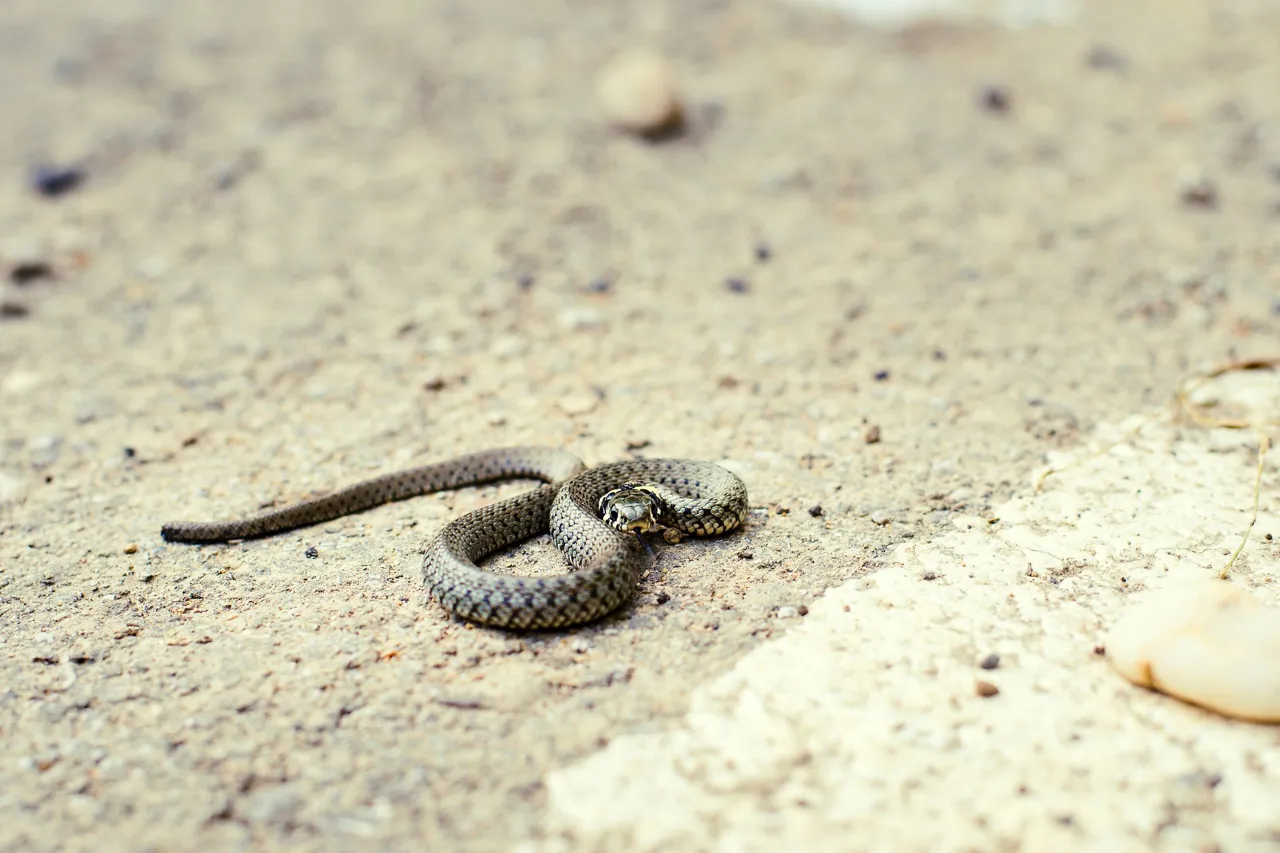
Tiny Southeast Asian snakes can escape danger through explosive cartwheels, and laboratory videos have now revealed the mechanics of this unusual movement. Reporting October 19 in Current Biology, researchers documented the behavior in three Pseudorabdion species collected from Malaysia’s Kubah National Park. The animals, which measured roughly 11 to 28 centimeters long and typically hid beneath leaves, included 11 individuals of one species and one each of two others.
The team placed the snakes individually on a 2.2-meter track, using a gentle tap to encourage movement while cameras recorded from overhead and from the side. Every Pseudorabdion individual cartwheeled, reaching speeds of approximately 3.8 to 8.3 miles per hour. By contrast, none of the six Calamaria snakes tested for comparison performed the maneuver. Each cartwheel starts with the body curved into a C and the head raised toward the direction of travel. The snake whips its tail backward, briefly becomes airborne, then swings the tail over its head. Contact between the tail and the ground initiates the next rotation, while the head remains relatively stable throughout.
The investigation followed an account of the behavior that ecologist Yosuke Kojima heard from a colleague in Sarawak, Malaysia, in 2019. Photographs of a dwarf reed snake cartwheeling were first shared by scientists in 2023. Biologist Jessica Tingle, who was not involved in the new research, raised questions about whether distinctive anatomy, physiology, or neural control enables these snakes to execute such demanding movements.