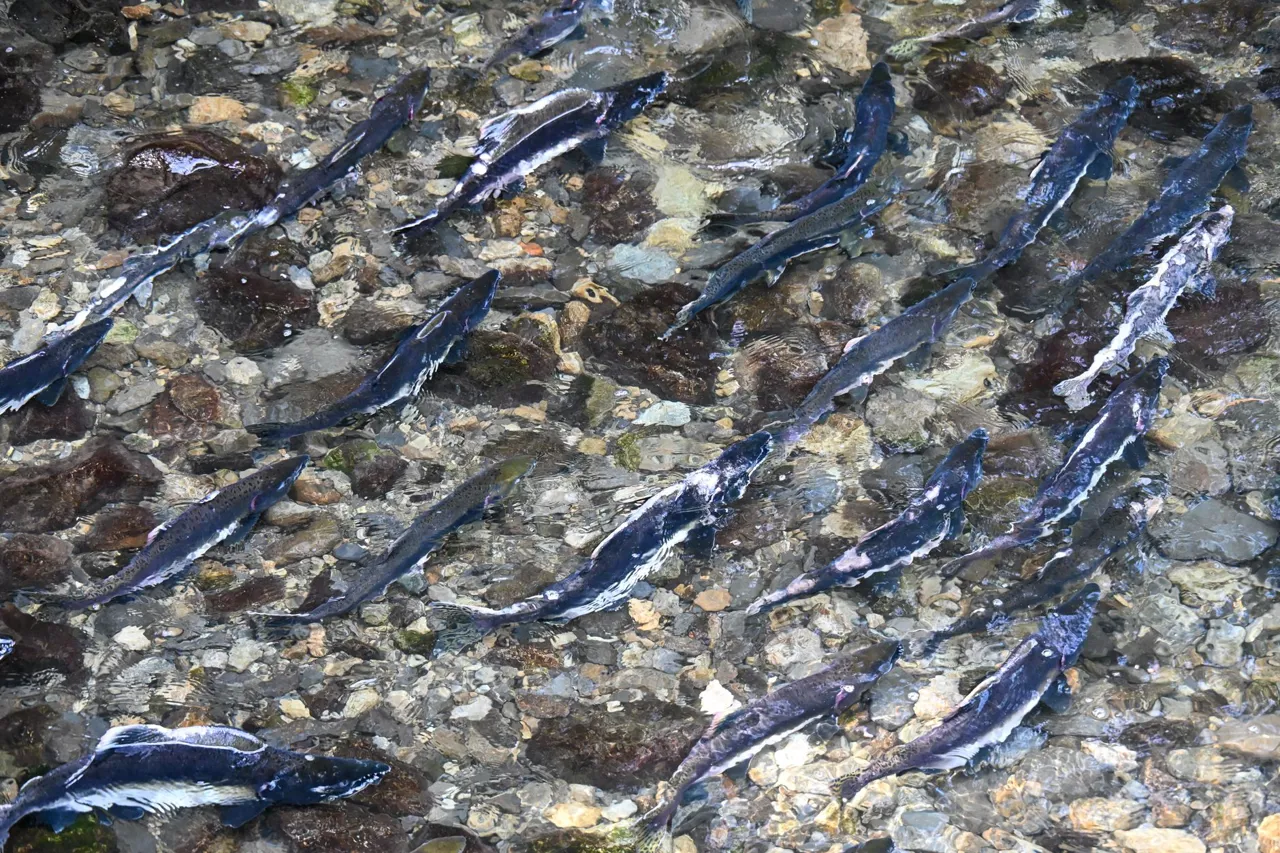
Chinook salmon have rapidly recolonized historical habitat in the Klamath River following the removal of four dams in 2024. The river, which flows through Southern Oregon and Northern California, was heavily dammed during the 20th century, obstructing access to spawning grounds. Its spawning salmon population consequently declined by approximately 90%. Removing the dams reopened stretches that had been inaccessible for roughly a century.
A recent study recorded 7,742 Chinook migrating upstream beyond the former dam sites shortly after removal; in 2025, that figure exceeded 13,000. The fish spread through 345 kilometers, or 214 miles, of previously blocked river, reclaiming 88% of their known historical habitat. Lead author Damon Goodman had anticipated their return, but the speed and extent of recolonization surprised him. To reach these areas, salmon navigated difficult rapids, engineered fish passages, and a large lake. Researchers monitored the fall migration continuously using a specialized sonar camera near the former Iron Gate Dam site. By generating moving images with sound rather than light, it enabled them to measure individual fish and distinguish Chinook from other species despite extremely muddy water.
Goodman considers substantial recovery possible, while emphasizing that renewed access alone cannot restore historical population levels. Successful reproduction over multiple generations must accompany improvements in habitat, water quality, and fish passage throughout the basin. Scott Hinch, a salmon expert at the University of British Columbia who was not part of the research, also called the speed of recovery remarkable. Nevertheless, dam removal has not eliminated all the challenges facing these salmon.