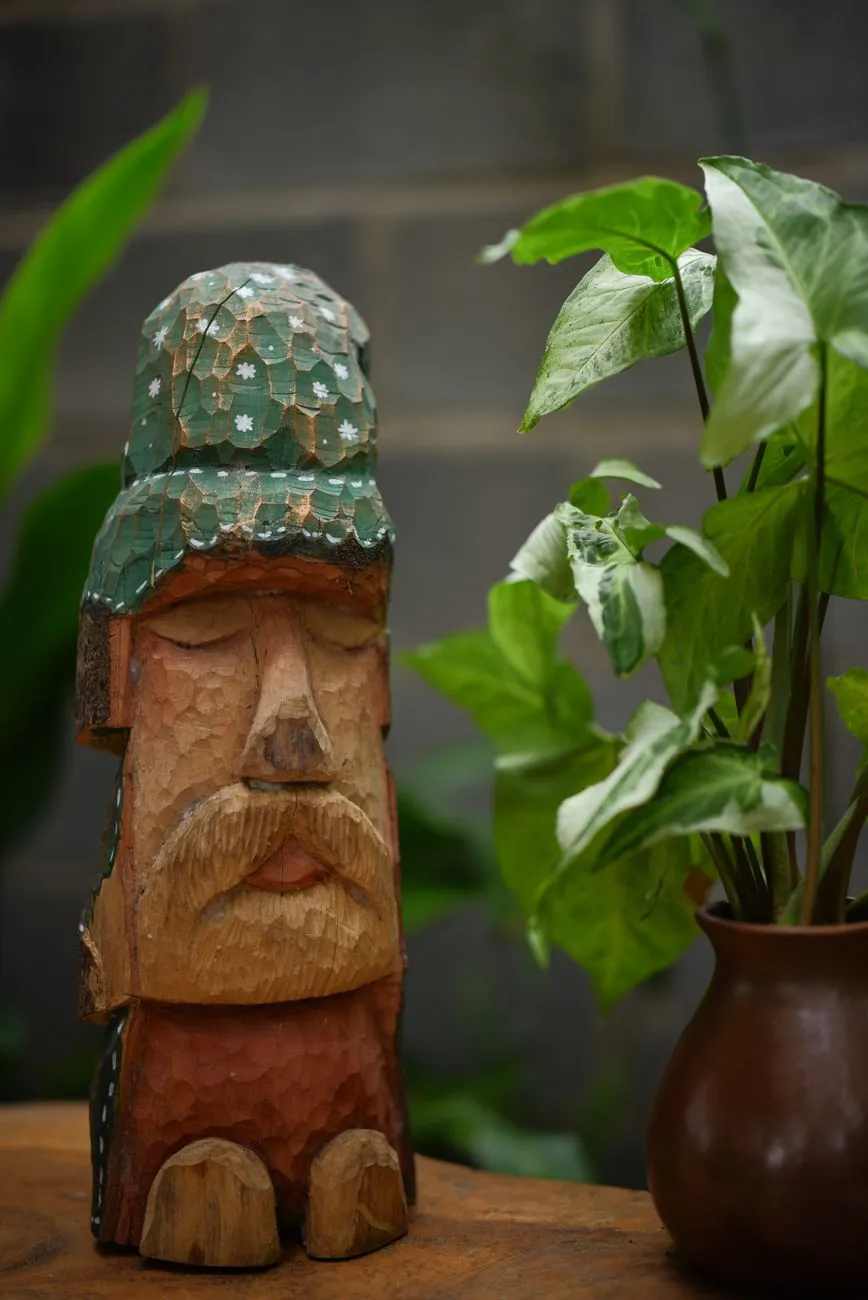
A driftwood figurine discovered in 1977 in an ancestral Inuit house on Baffin Island, in Canada's Nunavut territory, preserves an unusually early Indigenous perspective on European visitors. Dated to approximately 1350, the carving is the earliest known Indigenous representation of a European in the Western Hemisphere. Now displayed at the Canadian Museum of History, it measures just 2.1 inches, or 5.4 centimeters, in height.
Although its featureless face and stubby arms are characteristic of 14th-century Inuit carvings, its depiction of a non-Inuit person is distinctive. The figure probably portrays a Norse visitor: its long robe or tunic, marked with a cross on the chest, resembles clothing worn by Norse Christians in Greenland between the 11th and 13th centuries. Norse narratives describe Leif Eriksson's early-11th-century visit to a place most likely identified as Baffin Island. Around 1000, Norse explorers also established a camp in present-day Newfoundland, leaving wooden structures and evidence of iron production at the Americas' earliest European settlement.
European artifacts recovered from early Inuit houses suggest that Norse travelers likely made repeated journeys from Greenland to Canada, exchanging metal and cloth with the Inuit's Thule ancestors for walrus ivory. These westward trading routes were eventually abandoned, possibly because of Indigenous resistance and the distances involved. The figurine may commemorate an encounter between Inuit and Norse people. The museum emphasizes its significance as a record of which features an Indigenous maker chose to portray, centuries before sustained contact began in the late 15th century.