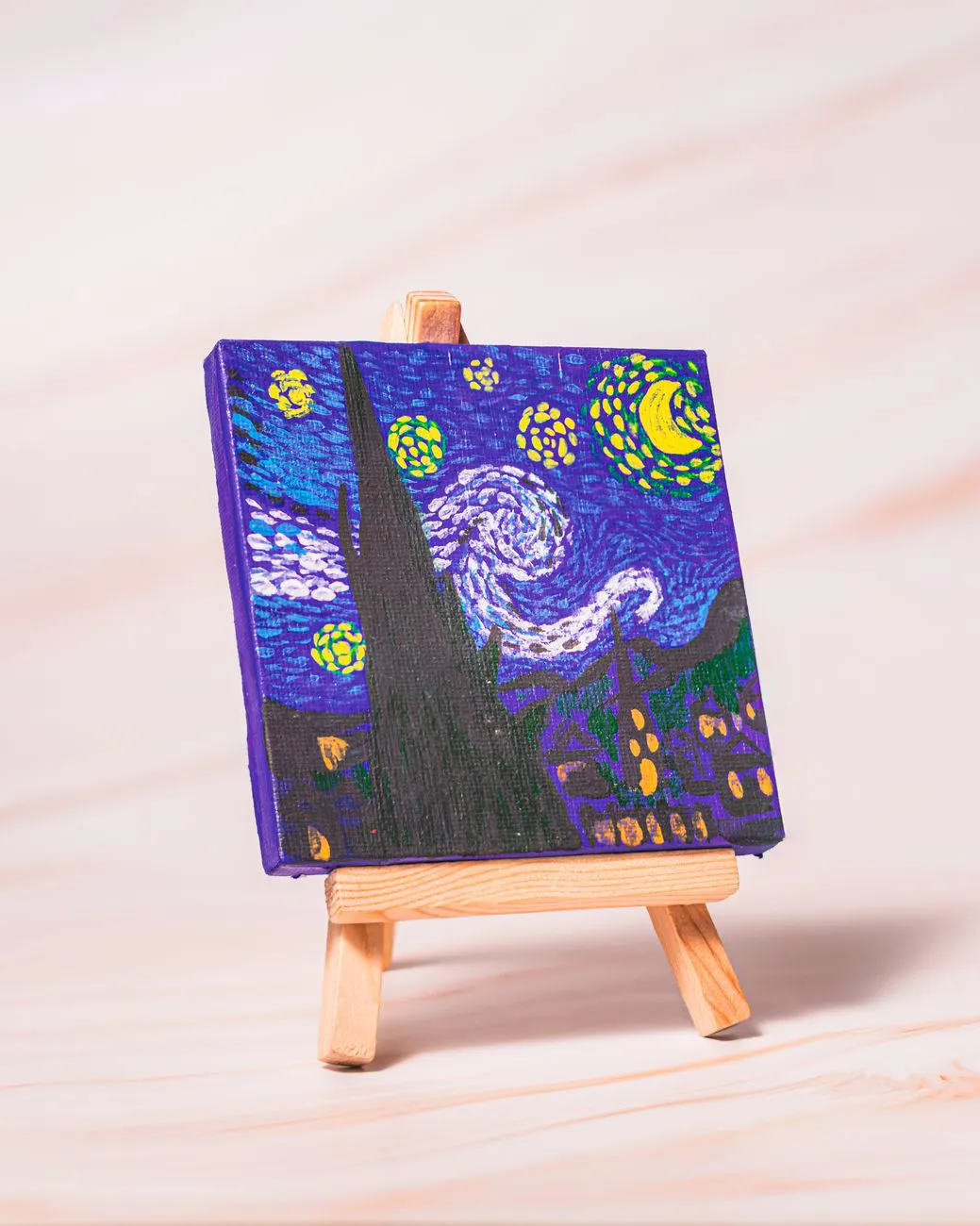
The sky in Vincent van Gogh’s “The Starry Night” may reflect observations made before dawn around July 22, 1889, according to a study published in Scientific Reports. Led by South Korean researcher Elijah Jeong-hyun Kim, the team challenges the conventional June dating, which rests partly on a letter to Theo in which Van Gogh mentioned a new starry-sky study around June 18. The painting drew inspiration from his hospital-room window in Saint-Rémy, southern France.
Using computer reconstructions, the researchers compared the positions of the Moon, Venus, and five central stars with the painted arrangement. A mathematical analysis that rotates, shifts, and uniformly resizes patterns revealed a close correspondence with the Hyades cluster in Taurus. Fieldwork in France in 2019 helped the team estimate the viewing frame, while the Moon’s slender crescent offered another clue against a mid-June interpretation. Together, these elements favored a sky around July 22. The researchers propose that Van Gogh could have begun the canvas in June and continued working on it in July.
Astronomer Donald Olson, however, argues that the assumed narrow field of view is incompatible with the broader landscape needed to encompass the painting’s hills and cliffs. He also questions the proposed identification of Aldebaran within the composition. The team acknowledges that other star groups can produce similar geometric matches, making the combined evidence essential. Even if the July interpretation is correct, it does not establish a precise completion date: Van Gogh may have combined observations from several days.