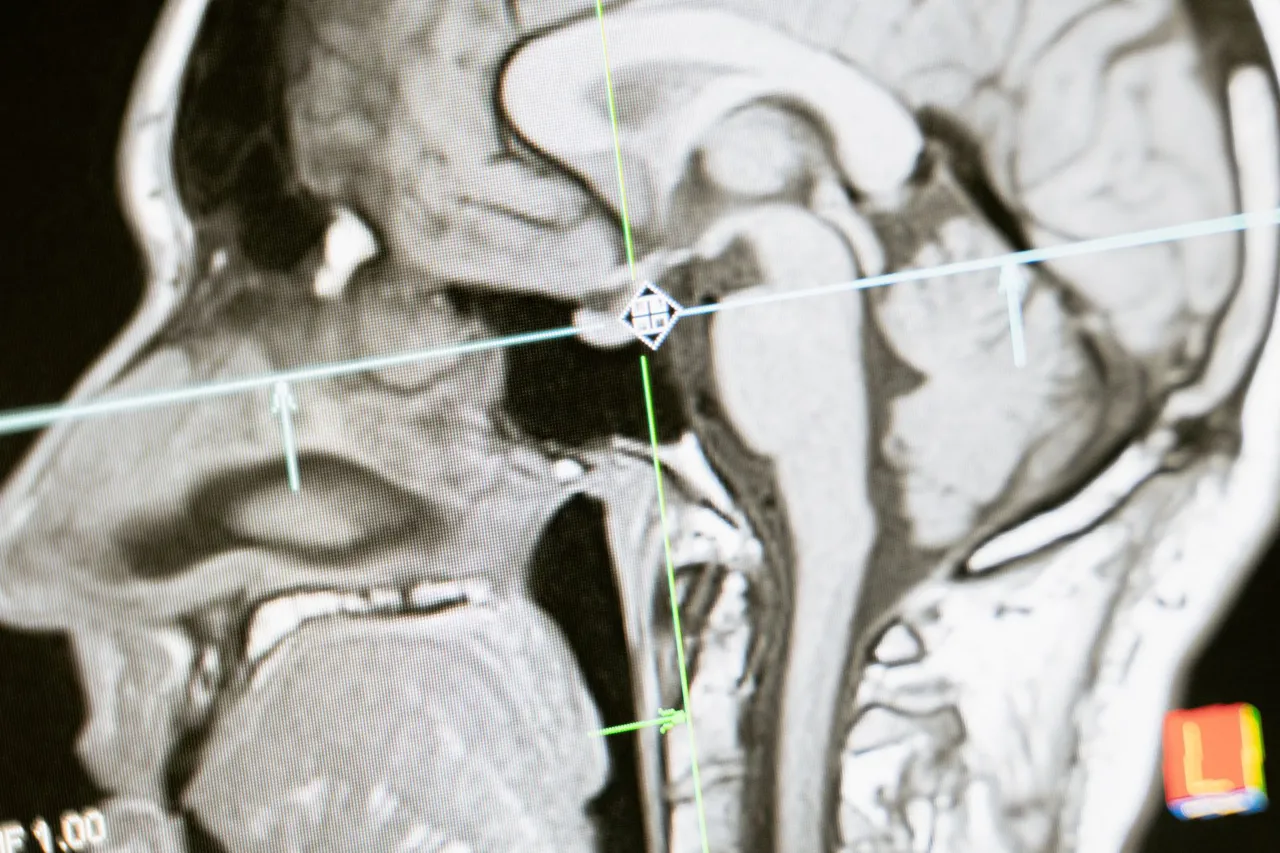
Researchers at MIT, Boston Children's Hospital and Inria have developed E(3)-Pose, a deep-learning model designed to improve fetal brain MRI by tracking head movement. The work was presented at the 2026 European Conference on Computer Vision. When routine prenatal ultrasound raises concerns about brain development, MRI can provide a closer examination, but imperfect images may lead to missed abnormalities or incorrect diagnoses.
MRI assembles two-dimensional slices into a high-resolution, three-dimensional image. If the fetal head moves during acquisition, those slices can be captured at inconsistent angles, leaving gaps that obscure important brain regions. Rather than relying entirely on training data to learn physical relationships, E(3)-Pose incorporates the head's left–right symmetry directly into its neural-network architecture. This helps the model determine brain orientation more accurately. First author Ramya Muthukrishnan, an MIT doctoral student, pursued the project after observing the frustration of an uncomfortable pregnant patient and a radiologist unable to obtain a complete, high-quality scan. Co-author Borjan Gagoski developed an additional MRI acquisition sequence to support training and helped resolve scanner problems during implementation.
The model has primarily been trained on third-trimester fetuses. Muthukrishnan now hopes to extend it to the second trimester and earlier, when smaller fetuses have more room to move within the uterus. Earlier detection can make intervention easier. Co-author Ellen Grant anticipates that the work will support faster, more comfortable scans through automation. Beyond fetal MRI, potential applications include other anatomy that is difficult to image and autonomous driving, where systems must track three-dimensional objects using noisy sensor data.