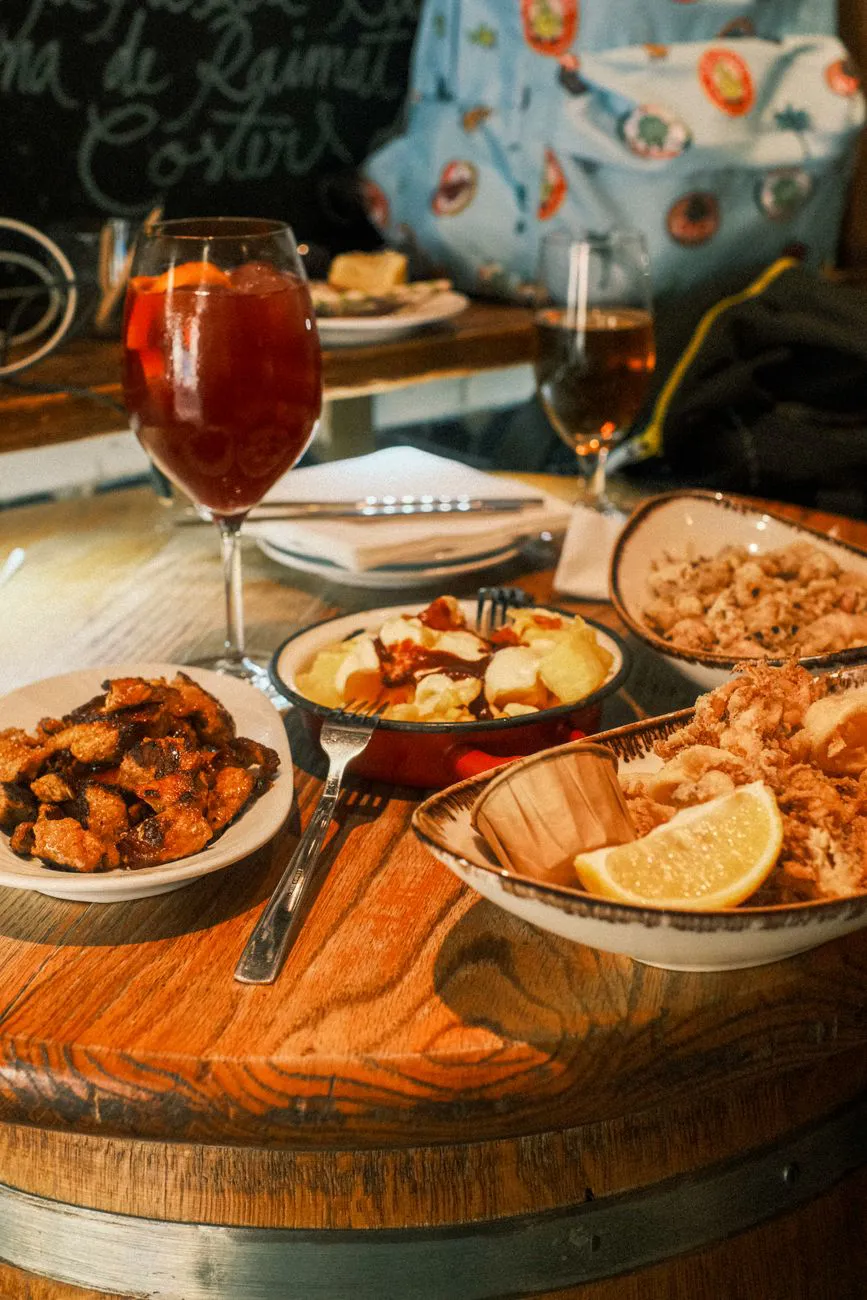
Across Spain’s 17 autonomous regions, distinctive ingredients and dishes are closely associated with place and, frequently, season. In Catalonia, sweet green onions become the centrepiece of outdoor gatherings from late November through April, with the season generally peaking in February. Grilled over burning vine cuttings, the onions are stripped of their charred outer layers and eaten by hand with a sauce containing almonds, peppers, tomato, garlic and olive oil. The town of Valls holds its annual onion festival in January.
In Andalusia, summer menus feature a chilled soup combining tomatoes, peppers, cucumber, stale bread, garlic, olive oil and vinegar; watermelon variations also appear in restaurants. Other regional specialities are less restricted by season. Castile-La Mancha’s celebrated sheep’s milk cheese, for example, is produced in La Mancha using milk from a particular local breed. Its protected designation requires ageing for at least 30 days, or 60 days for larger wheels, with an upper limit of two years.
Winter brings a substantial white bean stew to tables in Asturias, where cold, wet weather accompanies a dish enriched with meats including smoked sausage and salt-cured pork belly. In the Basque Country, cider ferments in wooden barrels for approximately three months, making the new season’s drink ready in January. Between mid-January and April, cider houses welcome visitors to communal tables for shared dishes. As barrels are opened, guests queue to sample the cider and compare its character from one barrel to another.