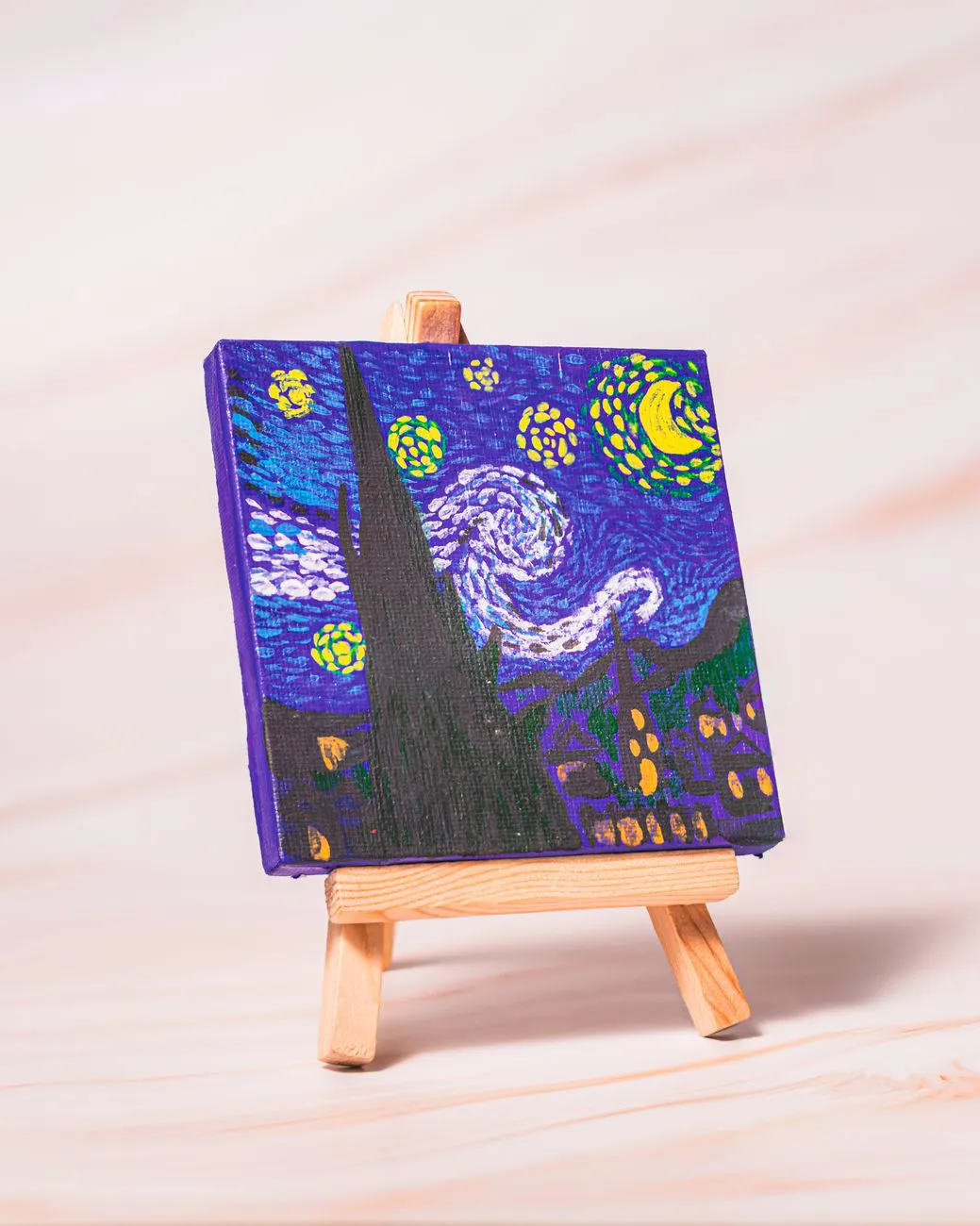
Vincent van Gogh’s The Starry Night may incorporate observations of the sky before dawn around 22 July 1889, a study published in Scientific Reports suggests. Led by South Korean researcher Elijah Jeong-hyun Kim, the team challenges the conventional June dating, which rests partly on a letter to Van Gogh’s brother Theo mentioning a new starry-sky study around 18 June. The painting drew inspiration from his hospital window in Saint-Rémy, southern France, although its landscape also incorporated other views.
Following field trips to France in 2019, the researchers combined landscape comparisons with computer reconstructions of the 1889 sky. They used mathematical shape analysis to compare five central painted stars with the Hyades, a V-shaped cluster in Taurus. Considered together with Venus, the crescent Moon and the reconstructed field of view, the arrangement around 22 July offered the strongest match. A later pen drawing showed an even closer correspondence. The team also tested its approach on other Van Gogh night scenes, including Starry Night Over the Rhône, which depicts the Big Dipper.
The findings leave open the possibility that Van Gogh began the canvas in June but continued working in July; they do not establish a completion date. Astronomer Donald Olson disputes the narrow field of view underlying the analysis, arguing that a wider perspective is needed to encompass the painted hills and cliffs. Moreover, other star groups produced close geometric matches, so shape alone cannot establish their identity. The proposed identification therefore depends on several astronomical and visual clues supporting one another.