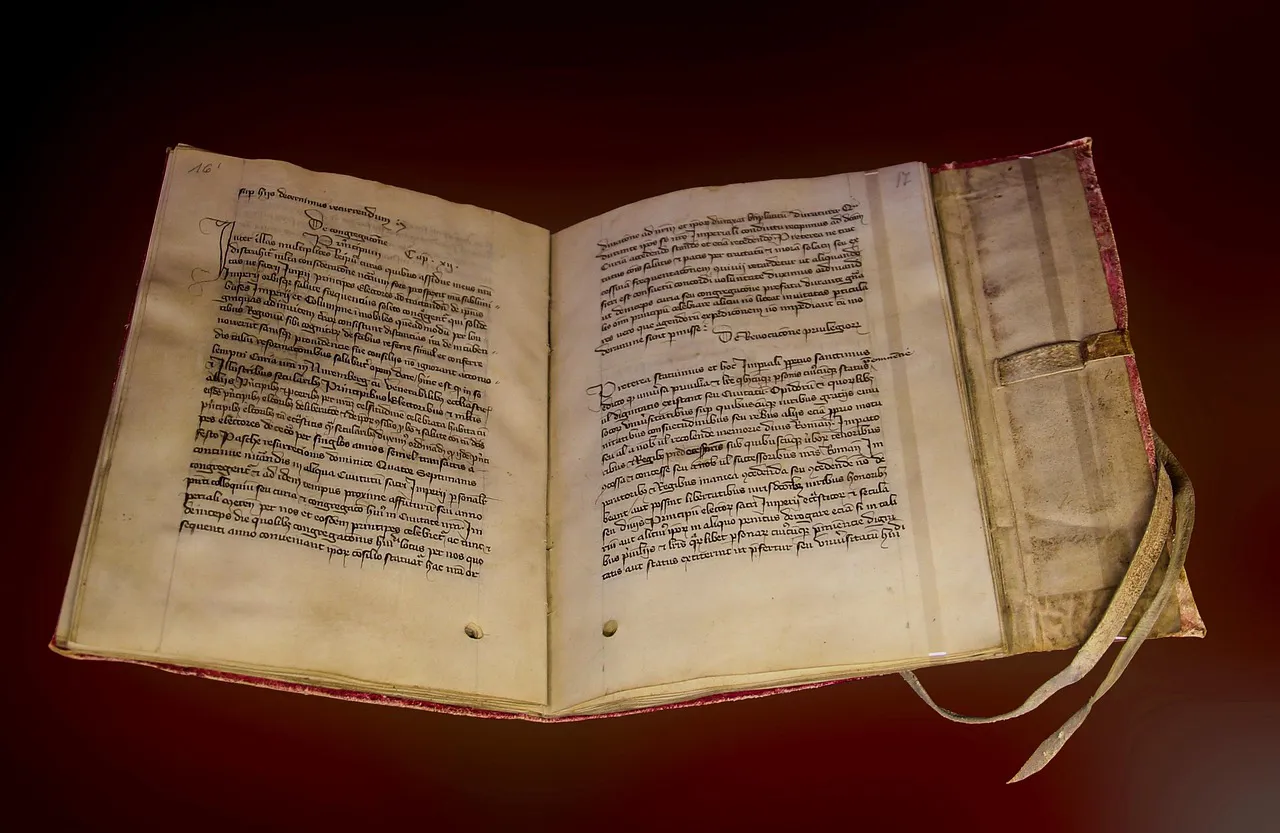
The Voynich manuscript, whose unfamiliar script has resisted interpretation for more than a century, may owe some of its apparent incoherence to incorrect binding. In a study published in Digital Medievalist on 19 October, Lisa Fagin Davis and Colin Layfield propose that its pages were assembled in the wrong order. The manuscript contains 240 pages, illustrated with people, plants and astrological symbols, on parchment carbon-dated to the early 15th century. Purchased by Wilhelm Voynich in 1912, it has belonged to Yale University's rare book library since 1969.
Davis, executive director of the Medieval Academy of America, identified irregular changes in handwriting and illustrations that continue across leaves now separated by intervening pages. Rather than forming a conventional bound volume, the researchers suggest, the document originally consisted of loose folded sheets. Layfield, an information systems researcher at the University of Malta, tested the hypothesis using latent semantic analysis, a computational technique developed to detect underlying patterns in texts. Comparisons revealed strong similarities between certain pages and weaker connections between others, lending support to the proposed rearrangement without establishing what the writing means.
The hypothesis could require a reassessment of previous research that assumed the existing sequence was correct. It also offers another avenue for investigation: water stains near the upper margins do not match as expected between neighbouring pages. Davis and Layfield are considering how comparisons of those shapes might help reconstruct the sequence. The manuscript remains undeciphered, and whether its writing represents a code is still uncertain.