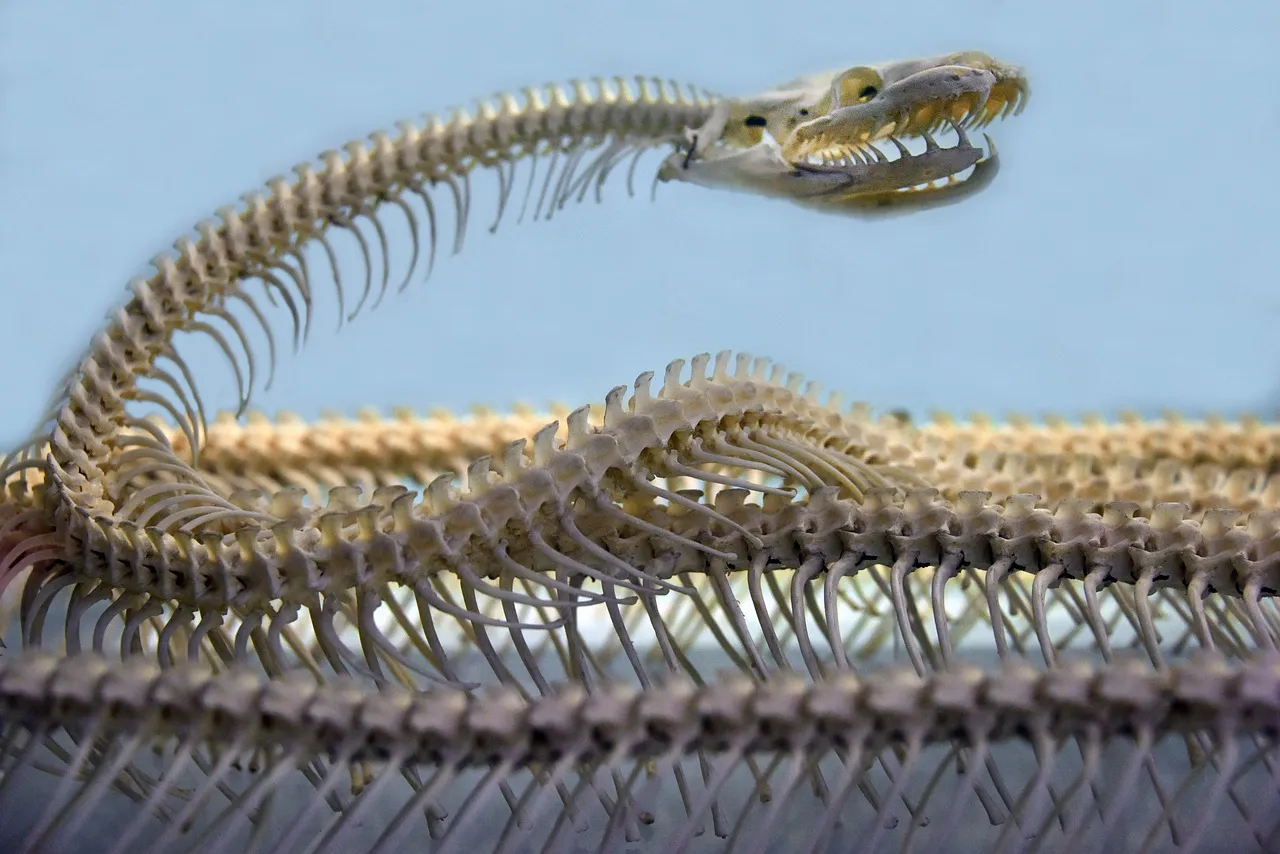
Scientists have identified a huge ancient snake from 27 fossil bones found in Gujarat, western India. Named Vasuki indicus, it lived about 47 million years ago. The bones came from its backbone and appear to have belonged to an adult. Researchers compared them with bones from living snakes to estimate its length.
Their calculations suggest that Vasuki measured between 10.9 and 15.2 metres. This puts it among the largest snakes ever discovered, alongside Titanoboa, which lived in what is now Colombia. However, different methods gave different results, so scientists are not certain whether Vasuki was longer. Its broad bones suggest that it had a thick body and probably moved slowly. It may have hidden and waited for prey rather than chasing other animals. It could have lived on land or in shallow, swampy areas.
The region had a warm, tropical climate, with average temperatures of about 28 degrees Celsius. This warmth may have supported the snake's growth, but temperature was not the only influence. Food, suitable surroundings and evolutionary history also affect how large snakes become.