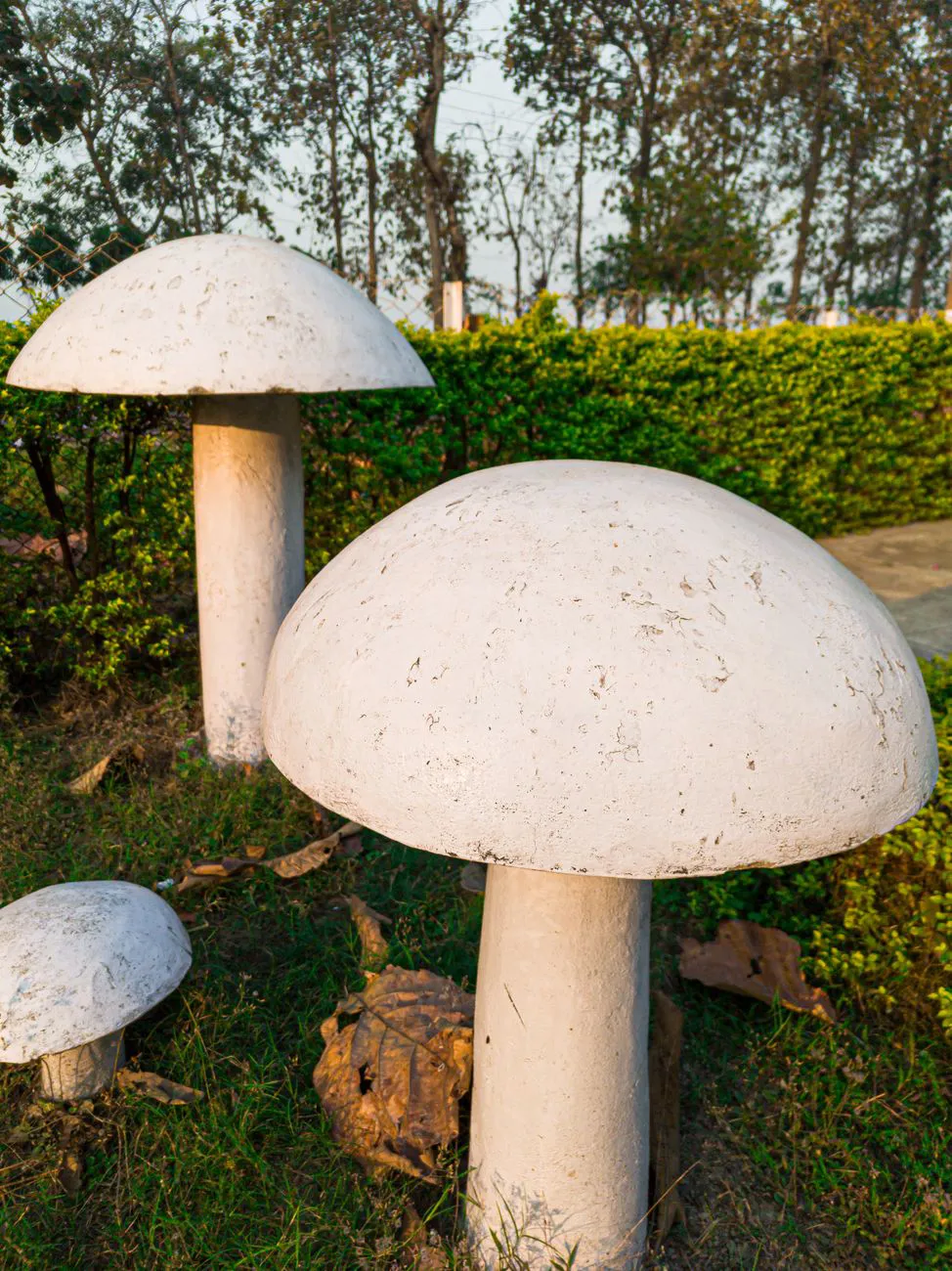
An international team of scientists from China, Thailand and Mexico has identified a giant wood-decomposing fungus in Yunnan, south-west China. Discovered on the woody roots of Chinese cork oak during fieldwork in temperate coniferous forests and tropical rainforest, Dianjunus rex produces whitish, upright fruiting bodies reaching 20 inches tall and weighing up to 5 pounds. Its name refers to an ancient Chinese kingdom. Previously recorded fruiting bodies among its broader fungal group reached only 20–30 centimetres, approximately half its height.
After cultivating spores, examining the fungus's morphology and sequencing its genome, researchers established both a new genus and a new family, Dianjunaceae. The family belongs within Ascomycota, the largest fungal group, comprising more than 64,000 species. Comparisons with hundreds of fungal genomes of known evolutionary age suggest that Dianjunaceae originated around 65 million years ago, approximately one million years after the mass extinction that eliminated the dinosaurs. Researchers propose that the resulting abundance of dead vegetation may have opened ecological opportunities for wood-decomposing fungi.
The exceptional height could allow spores to disperse by wind above surrounding vegetation and debris, although constructing such substantial fruiting bodies demands considerable energy. This explanation remains a hypothesis. Researchers anticipate further discoveries in subtropical China, where varied habitats, climatic stability and complex biological interactions favour fungal diversification. Fieldwork difficulties, seasonal and inconspicuous fruiting, and a historical focus on economically important fungi have contributed to the region's fungal diversity being underestimated.