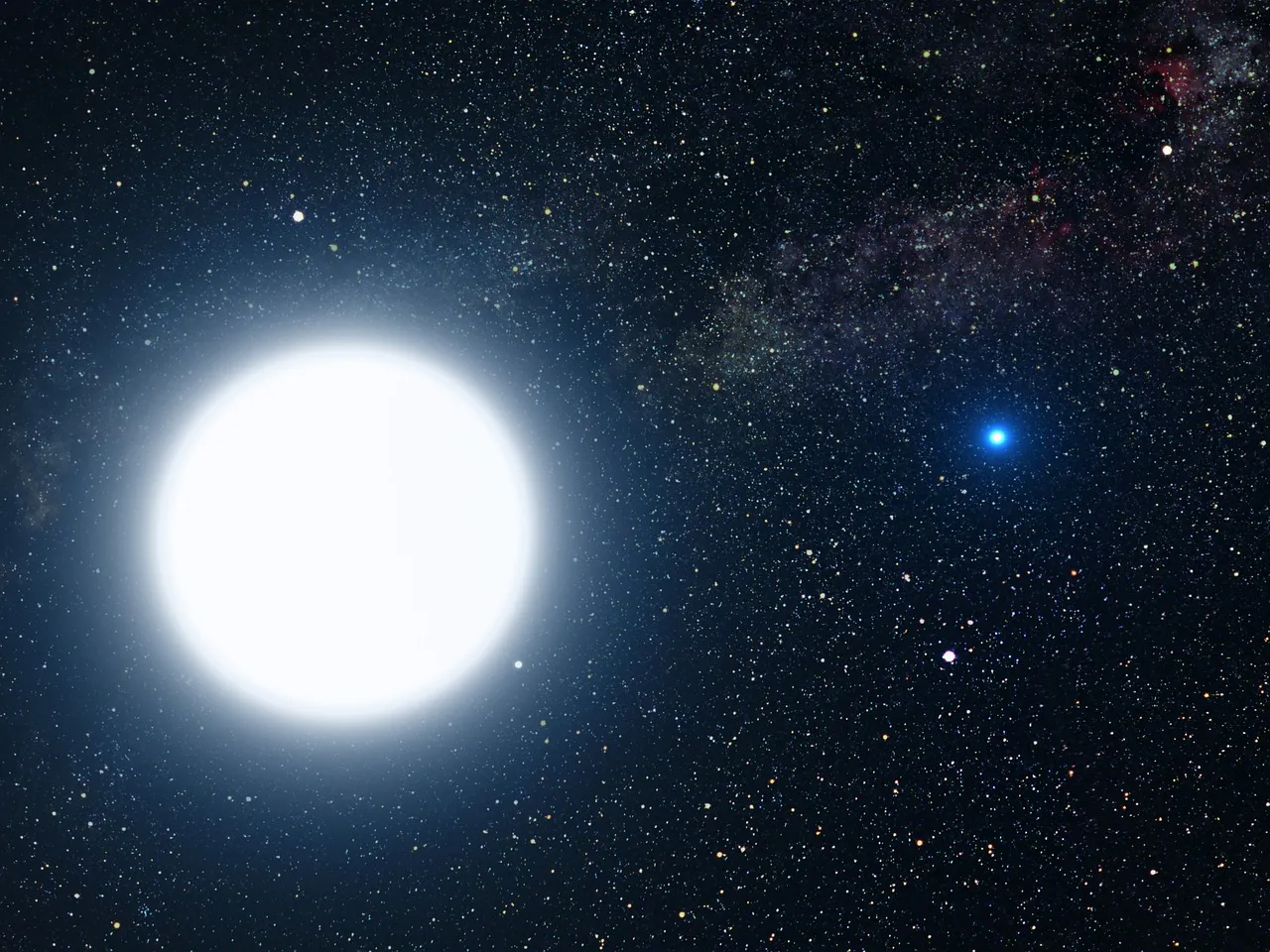
Astronomers at the University of Warwick have identified what they believe is the first credibly established example of a genuinely green star. The white dwarf WD J1330+6435, with a temperature of approximately 4,000 degrees Celsius, would appear yellowish-green to human eyes. White dwarfs are the exceptionally dense remnants of stars similar to the Sun, but their colours can extend beyond the familiar temperature-dependent range to include pink, purple, yellow and cyan.
Because none is close enough for its colour to be distinguished directly by eye, the researchers processed stellar spectra through a model of human colour vision. Their findings, published in RAS Techniques and Instruments, link unexpected hues to atmospheric density and composition. Under extreme pressure, elements absorb a broader range of wavelengths than they would in less dense conditions. Material drawn in from WD J1330+6435’s former planetary system brought calcium, lithium and sodium into its atmosphere. Sodium absorbs orange light, producing its green appearance. Another white dwarf, WD J1011+2845, lies 48 light-years away and may be the reddest star documented: carbon transported from its interior gives it a deep salmon-pink hue.
A representative sample of 151 white dwarfs within approximately 65 light-years contained five unusually coloured objects: two yellow and three pink. The team therefore estimates that around one in 30 white dwarfs could display an unexpected colour. Nevertheless, measurements of the remaining stars indicate that a typical white dwarf genuinely appears white. Brighter, bluer examples are disproportionately represented in surveys selected by brightness.