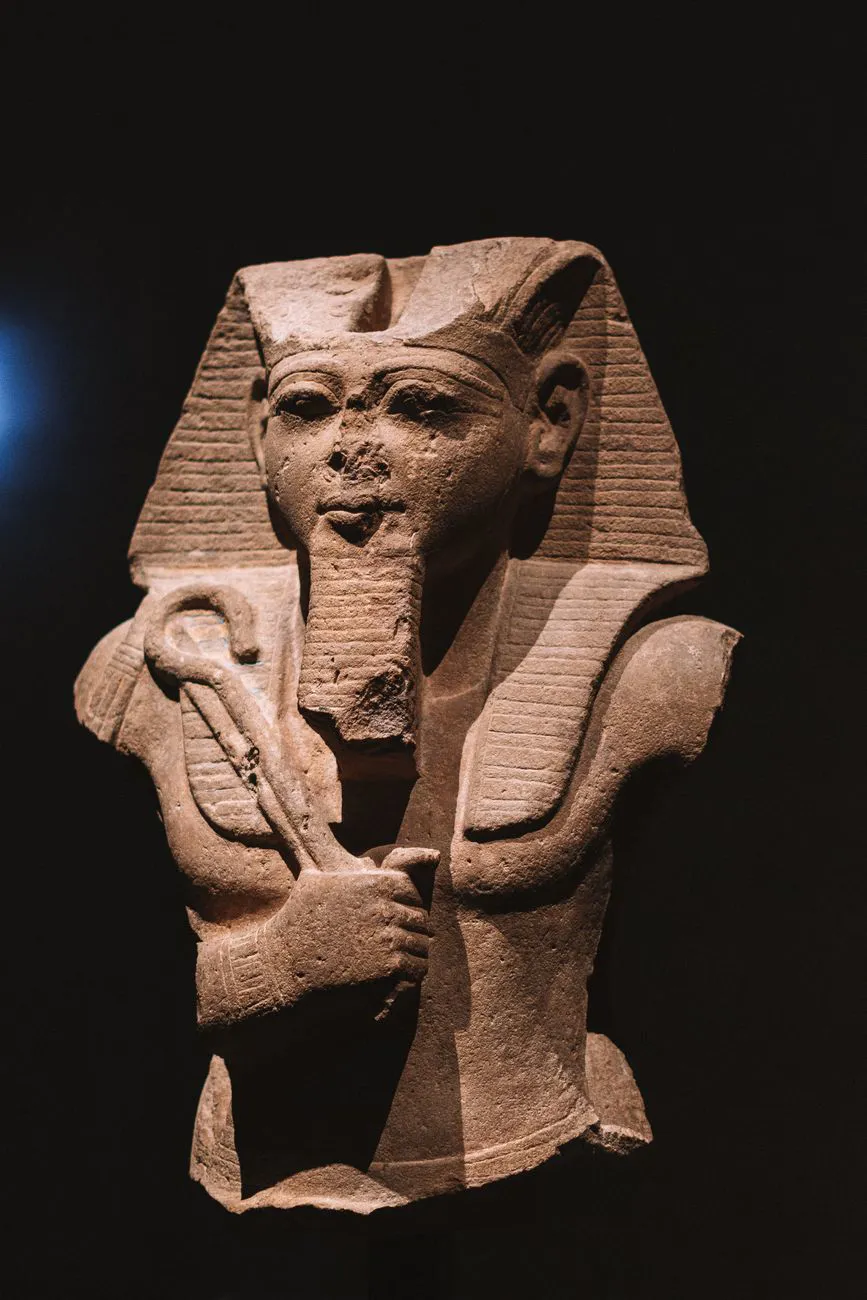
The remains of two monumental statues associated with Ramesses II have been unearthed at Behbeit Al-Hagar in Egypt's Nile Delta after a resident, Khaled el-Shahat, discovered an inscribed stone on his property and alerted the authorities. The Ministry of Tourism and Antiquities dispatched an archaeological team to investigate. Known for its temple dedicated to the goddess Isis, the site had previously yielded architectural fragments bearing the king's name.
The larger sculpture depicts Ramesses II wearing the double crown, symbolising his unified rule over Upper and Lower Egypt. Its surviving head measures approximately 1.6 metres in height, indicating an original statue around 8.5 metres tall. A surviving section of its rear supporting pillar bears his Horus name, one of several royal names used by Egyptian rulers. The second statue, approximately 2.4 metres tall, is also thought to represent Ramesses II and features a striped royal headcloth. A nearby pink granite block carries inscriptions identifying him as king of Upper and Lower Egypt and son of the sun god Ra.
Ramesses II ruled for 66 years, from around 1279 to 1213 BC, and commissioned extensive building projects. Egyptologist Mahmoud Emam, who was not involved in the latest excavation, noted that the statues were found west of the temple complex. Earlier fragments, discussed in a 2017 paper, suggested substantial construction under the king. Emam has called for further archaeological investigation, warning that urban expansion threatens the site.