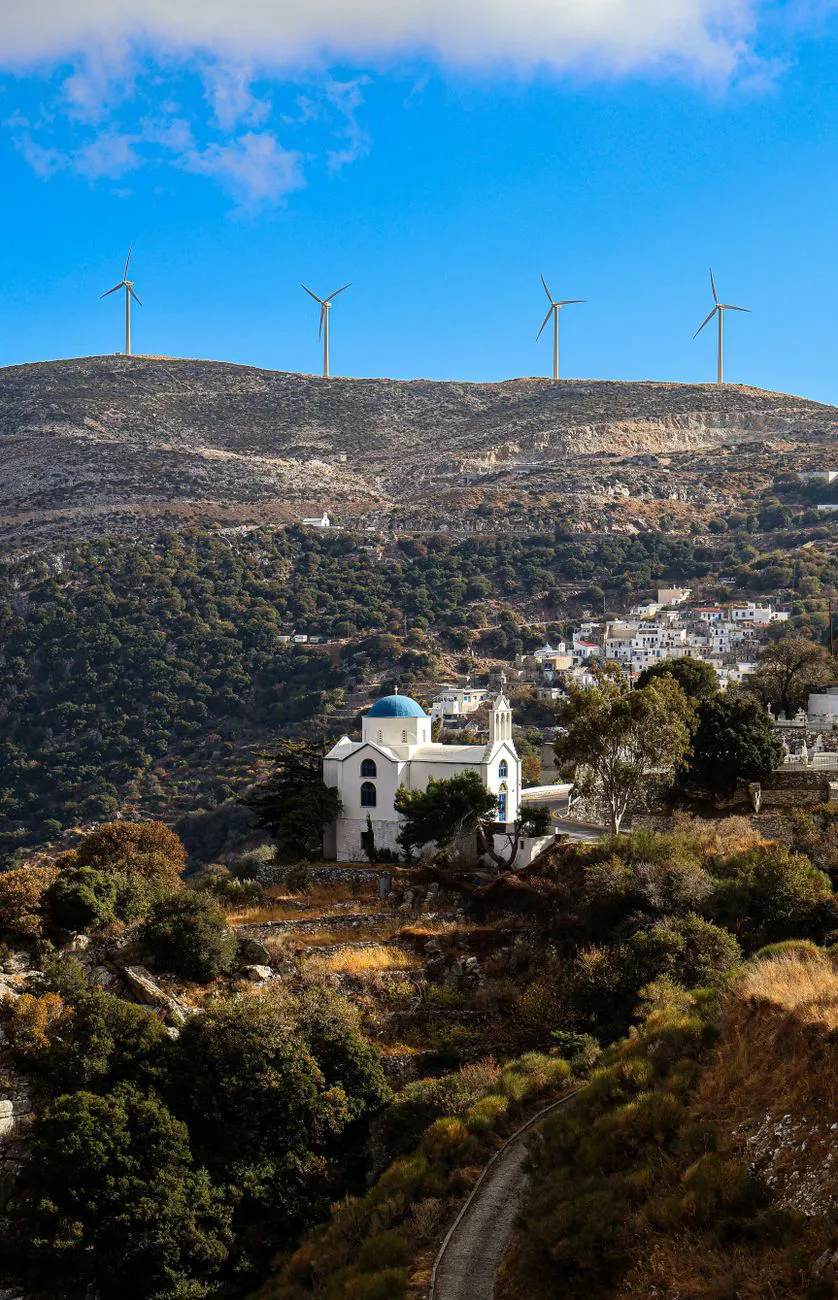
Agios Efstratios, a volcanic island of 250 residents in the north-eastern Aegean Sea, has moved from complete dependence on fossil fuels to generating 91% of its electricity from renewable sources. The EU-backed Green Island project prevents approximately 1,000 tonnes of carbon dioxide emissions annually. Its €7.23 million budget was financed through EU Cohesion Policy funding, which covered 85%, and Greek national funds, which supplied the remainder.
The installation combines a 900-kilowatt wind turbine, a 225-kilowatt solar farm, battery storage and automated, real-time energy management. Surplus electricity is stored in batteries and released whenever renewable generation falls short. Power is distributed through the existing electricity grid. During winter, excess renewable energy is also converted into heat and stored in four hot-water tanks with a combined capacity of 500 cubic metres. Charalambos Makris, who manages two guesthouses, describes the heating as quiet and economical, removing the need to operate an indoor boiler.
Delivering the project required the transport and installation of a 77-metre wind turbine weighing nearly 30 tonnes at the island’s highest point. However, according to CRES project manager Panagiotis Zorlos, adapting Greek energy regulations was the greatest challenge: the existing framework was too general for this particular pilot system. Deputy Mayor Zoi Vlastou regards the project as a model for other islands and Greece more broadly. Other Greek islands, including Tilos, Ikaria and Astypalea, are following Agios Efstratios’s example in the transition towards renewable energy.