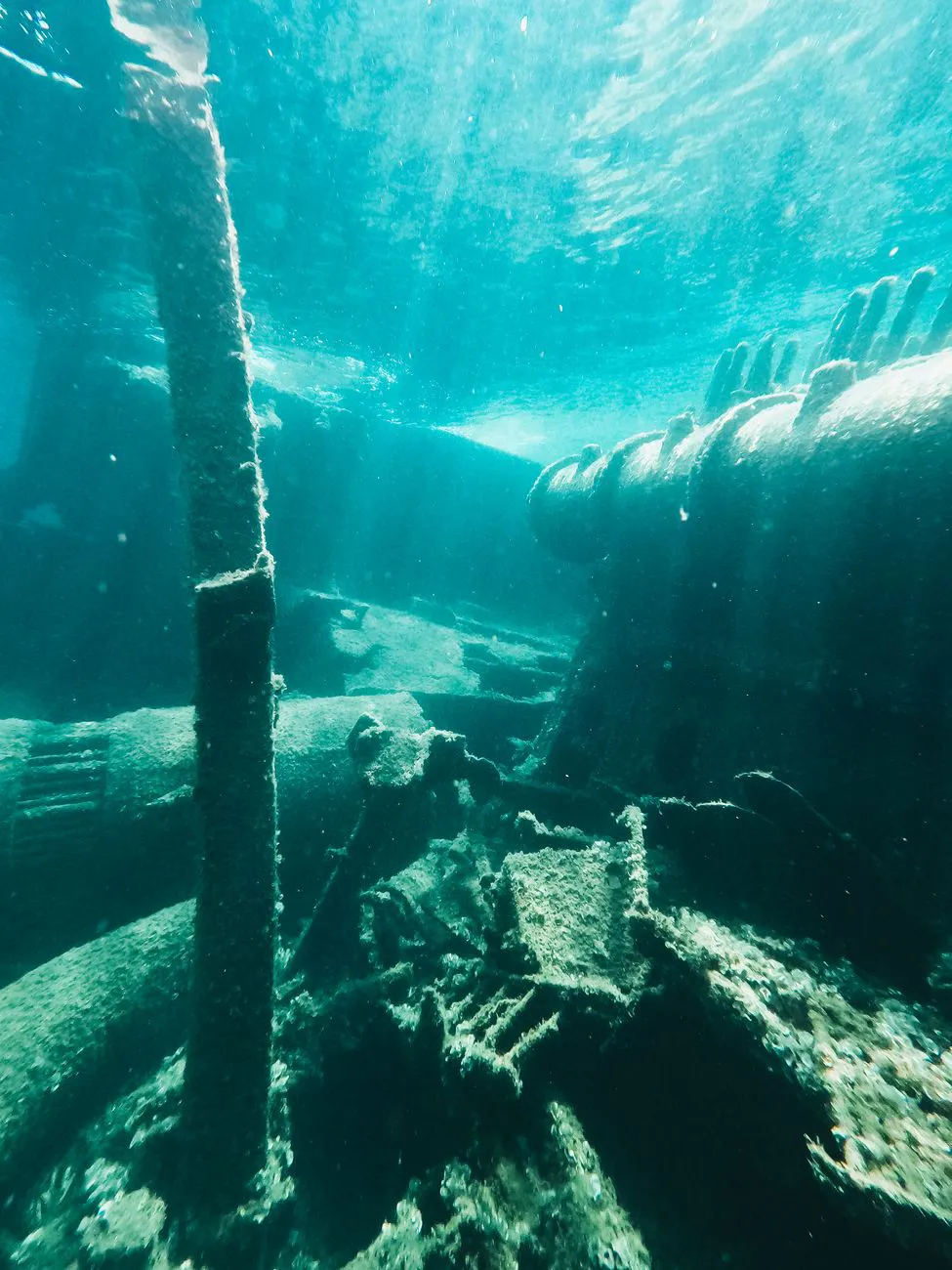
A shipwreck off Kekova, Turkey, could be the world’s oldest known, with researchers tentatively placing it around 2700–2400 BCE. Hakan Öniz discovered the site in shallow waters between two islands in 2024, following information from local seafarers. At roughly 4,500 years old, it would predate the approximately 4,200-year-old wreck near Dokos, Greece.
The proposed chronology remains provisional, with both earlier and later dates possible. Although the vessel’s wooden structure has disappeared, its cargo survives along a rocky underwater slope. The ship was traveling along Turkey’s southern coast, but its direction is unknown.
Central to the dating are large ceramic storage jars, whose shapes and manufacturing techniques provide chronological clues. These vessels have two handles and flat bases, while many feature a raised horizontal clay band around their widest section. Divers spent four months recovering pottery from barnacles attached to the submerged slope.
Visible residues inside the jars could be olive oil, wine, or tree resin. Some banded jars, or the clay used to produce them, may have originated in the Central Jordan Valley. Such evidence could clarify how goods circulated through eastern Mediterranean networks during the Early Bronze Age.
The wreck belongs to an era when Egypt traded through Byblos, in present-day Lebanon, importing materials including cedar, oils, and silver. Scientific analysis indicates that silver acquired by Egypt around 2600 BCE came from the Lavrion mines east of modern Athens. Although Egyptian ships were unlikely to have made that journey, vessels like the Kekova ship may have participated in a wider maritime network.