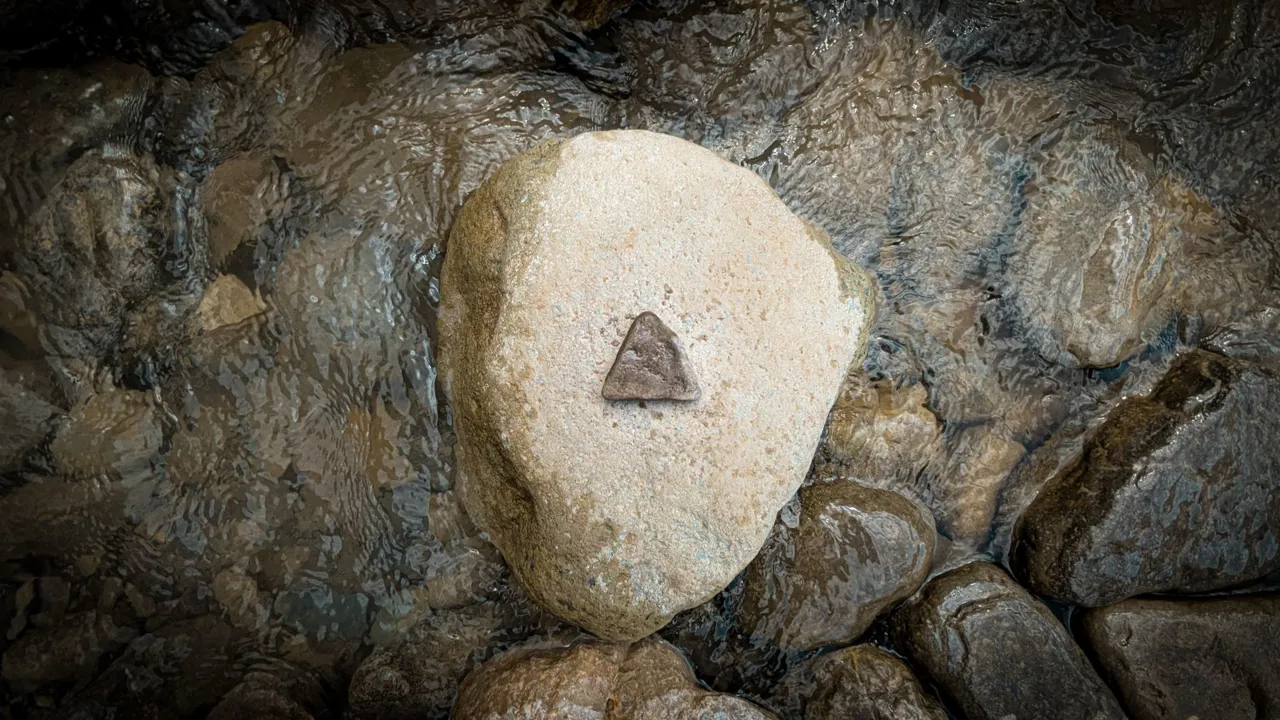
What began as a search for shark teeth produced an archaeological discovery for Brooklyn Rolph, a biology undergraduate at Mary Baldwin University in Virginia. On 21 September, the final day of an ecology field trip to Virginia’s Eastern Shore, she found a stone spearpoint estimated to be around 4,500 years old.
Exploring a mound of shells after lunch, Rolph spotted the artefact at the edge of an inlet and immediately alerted the professors accompanying the group. According to Paul Callo, a biology professor who co-led the trip, the incoming tide would shortly have buried it.
Measuring approximately 15 centimetres in length, the artefact was identified by local archaeologists as a Lehigh/Koens-Crispin point. Indigenous communities along the east coast of the United States produced this type of tool between roughly 4,500 and 3,000 years ago. Sometimes described as a broadspear, it may also have functioned as a knife for hunter-gatherers during the Late Archaic period.
The excursion formed part of an ecology course in which students studied coastal plants and animals. University staff had obtained a state permit to explore the barrier islands off the Eastern Shore, in the southern part of the Delmarva Peninsula.
The island where Rolph made her discovery lies within a natural area owned by the Virginia Department of Conservation and Recreation, making the spearpoint state property. Archaeologists collected it from the university group and transferred it to the Virginia Department of Historic Resources for further examination.