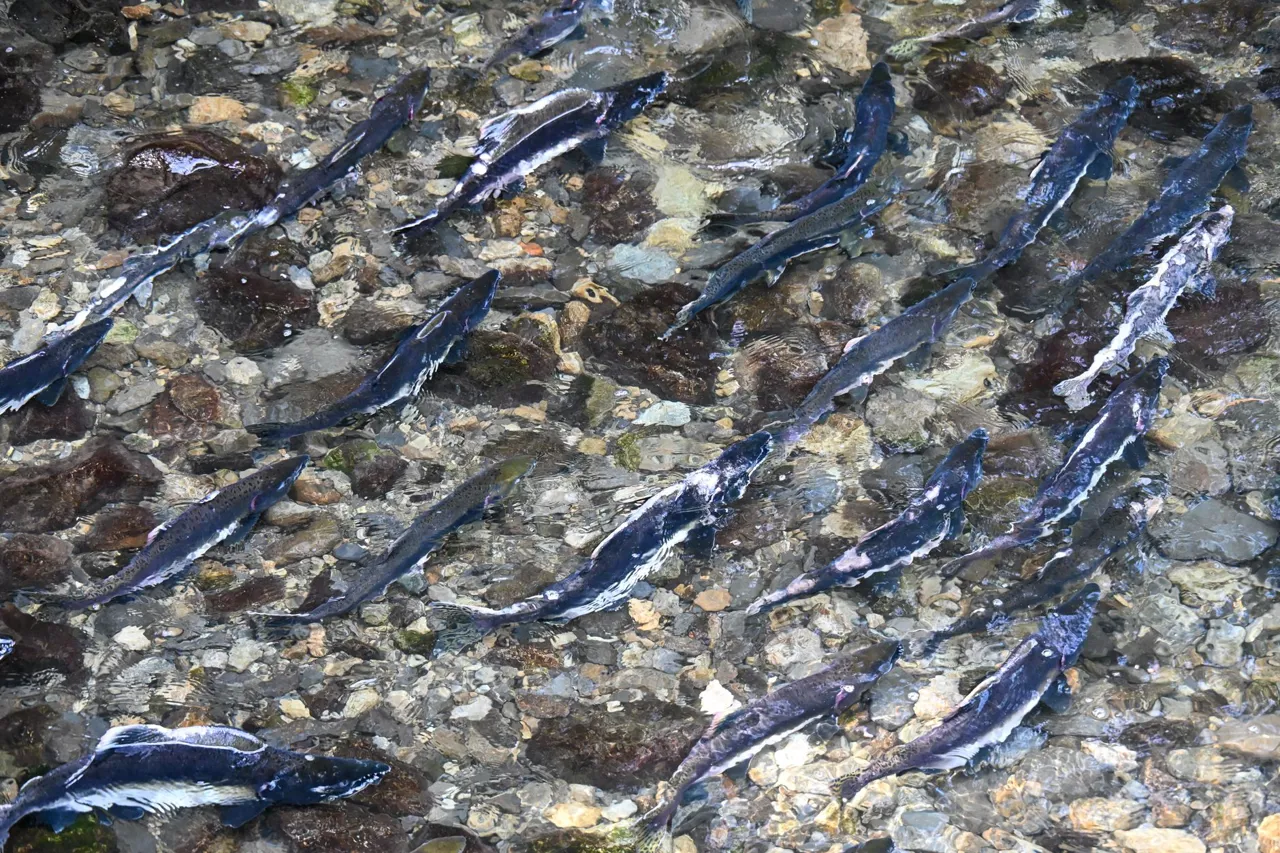
Chinook salmon are returning to parts of the Klamath River that dams blocked for roughly a century. The river flows through southern Oregon and northern California in the US. Dams built during the twentieth century prevented salmon from reaching places where they breed, and the breeding population fell by about 90%. Four dams were removed in 2024.
A study found that 7,742 Chinook salmon swam past the former dam sites shortly after removal. In 2025, the number rose to more than 13,000. The fish spread into 345 kilometres of previously blocked river, reaching 88% of their known historical habitat. Researchers expected them to return, but were surprised by how quickly this happened.
To count the fish, researchers used an underwater camera that creates images with sound rather than light. This allowed them to monitor salmon despite the muddy water. However, returning to old habitats does not mean the population has fully recovered. Salmon must breed successfully over several generations. They also need healthier habitats, better water quality and easier movement through the river system.