Around midnight on 24 December 1492, the Santa María ran aground near northern Hispaniola. After Columbus retired, the helmsman entrusted the steering to a cabin boy, contrary to his orders. With the vessel beyond repair, Columbus salvaged its timber and nails to construct La Navidad, the first Spanish settlement in the Americas. Guacanagarí, a Taíno chief, organised assistance with unloading and storing the recovered goods. The fort accommodated 39 men, whose mission was to trade with the Taínos and locate a gold mine.
Columbus returned to Spain, leaving the settlement under Diego de Arana's command. When he arrived again on 27 November 1493, accompanied by 17 ships and approximately 1,500 men, he found the fort burned and its Spanish inhabitants dead. Guacanagarí attributed the attack to another chief, although historians continue to question whether he himself was involved. Columbus abandoned the site rather than rebuilding, establishing La Isabela elsewhere on the island.
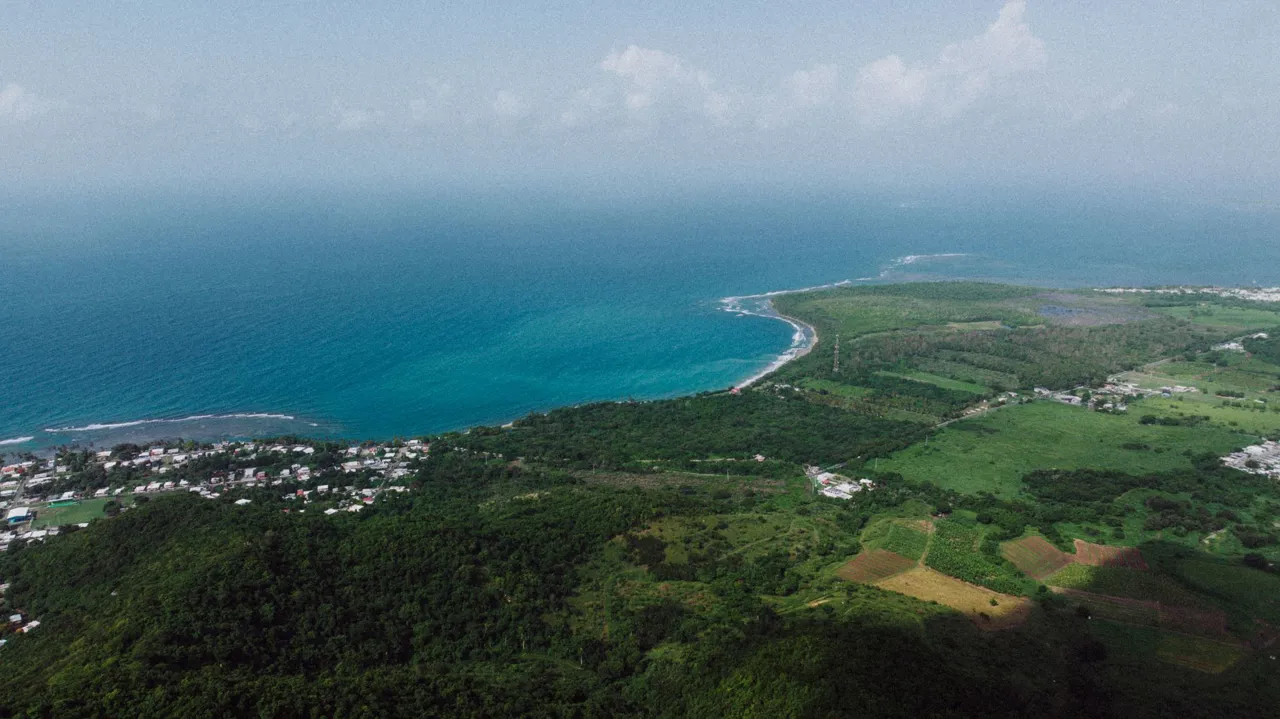
En Bas Saline in northern Haiti, identified by William Hodges in 1977, is considered the probable site of La Navidad. Excavations, including a campaign in 2003, revealed a substantial structure burned in the late fifteenth century, but the fort's precise location remains unresolved. The ship's remains are similarly elusive: Barry Clifford's 2014 underwater discovery claim was challenged by Haitian officials. Historian María Luisa Cazorla has proposed that river sediment extended the coastline, leaving the wreck beneath roughly six metres of deposits on land. Neither the vessel nor the fort has been conclusively located.