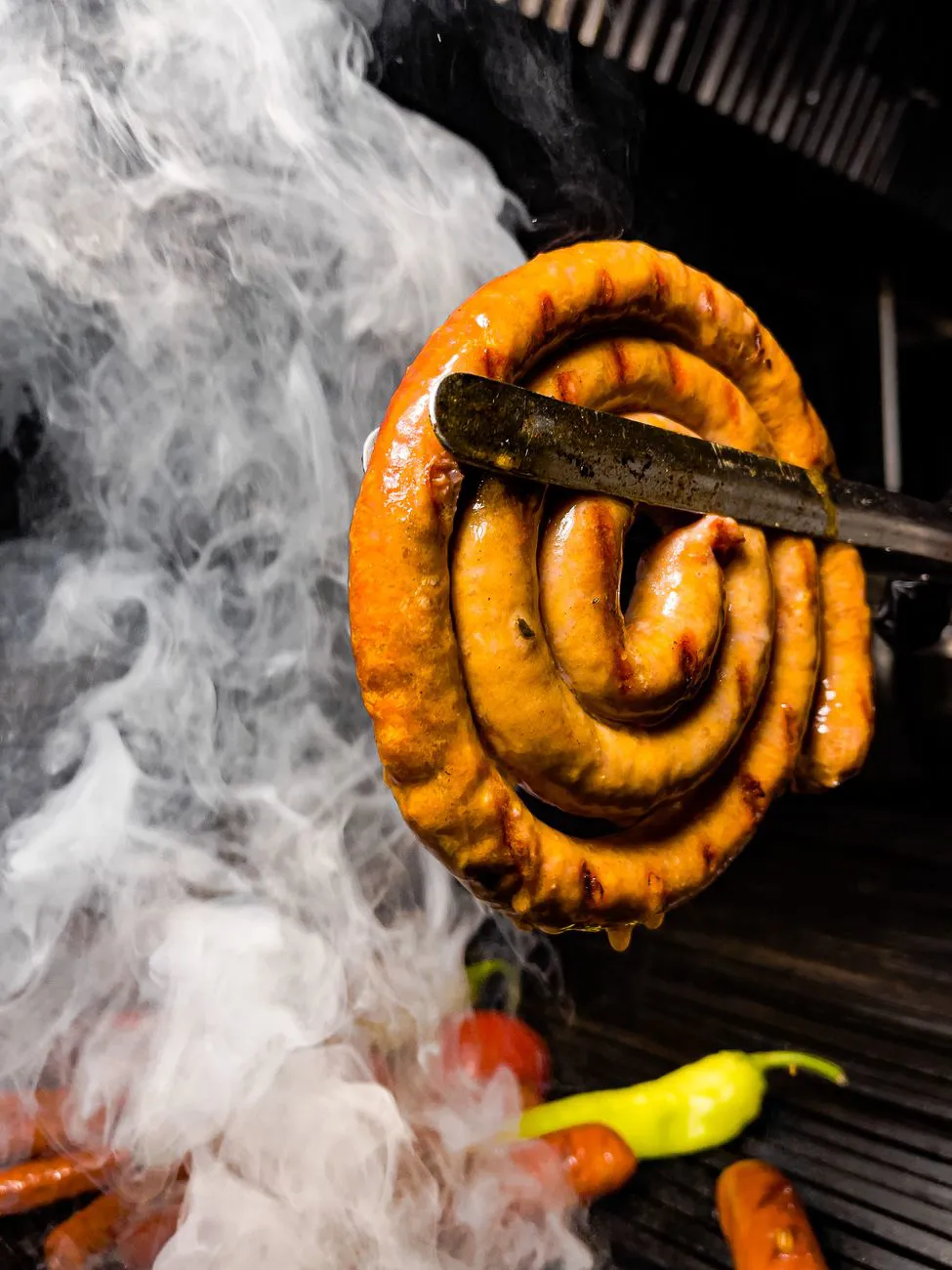
A traditional pork sausage from Brittany is caught between preserving its distinctive flavour and meeting food safety requirements. Produced in Guémené-sur-Scorff, it is smoked over beechwood, leaving soot on its surface and increasing concentrations of polycyclic aromatic hydrocarbons, or PAHs, which are potentially carcinogenic. Benoît Rivalan, owner of the century-old sausage business, fears that French authorities could close it over the EU’s 12-microgram limit for certain PAHs. He says protective sleeves capture 80% of these substances during smoking without sacrificing flavour, but warns that further changes could undermine the traditional process.
The dispute intensified after France’s Agriculture Ministry required producers to test the entire sausage, rather than removing its skin, on the grounds that consumers eat it too. According to Rivalan, readings consequently rose from 6–8 micrograms to 120–150 micrograms. Although France’s EU-sceptic far right has blamed Brussels, European rules permit exemptions where altering traditional smoking methods would significantly change a product’s flavour. The European Commission confirmed that France has not applied, unlike 10 other EU countries, and remains free to request one.
Pressure is therefore mounting on Paris. Brittany’s regional president, Loïg Chesnais-Girard, wrote to the government on 28 September seeking an application; all the region’s political parties except the Greens subsequently backed a resolution supporting that demand. It emphasised both consumer safety and the particular characteristics of traditional production. Meanwhile, Rivalan has reduced output by 30% and his workforce from 19 to 14 in anticipation of possible closure.